The Florence of A Room with a View

A young Englishwoman on the Grand Tour is unsettled by Florence and by a fellow guest at her pension, and the feeling follows her home. Part One maps the real city: a pension on the Arno embankment, the church of Santa Croce, the Piazza della Signoria where she faints, and the violet-covered slopes at Fiesole. Part Two moves to the Surrey hills near Dorking, mapped as scenes outside the setting.

Author
E. M. Forster, 1908
Places
6

Open the interactive map →

Chapter 10% in
Lucy Honeychurch

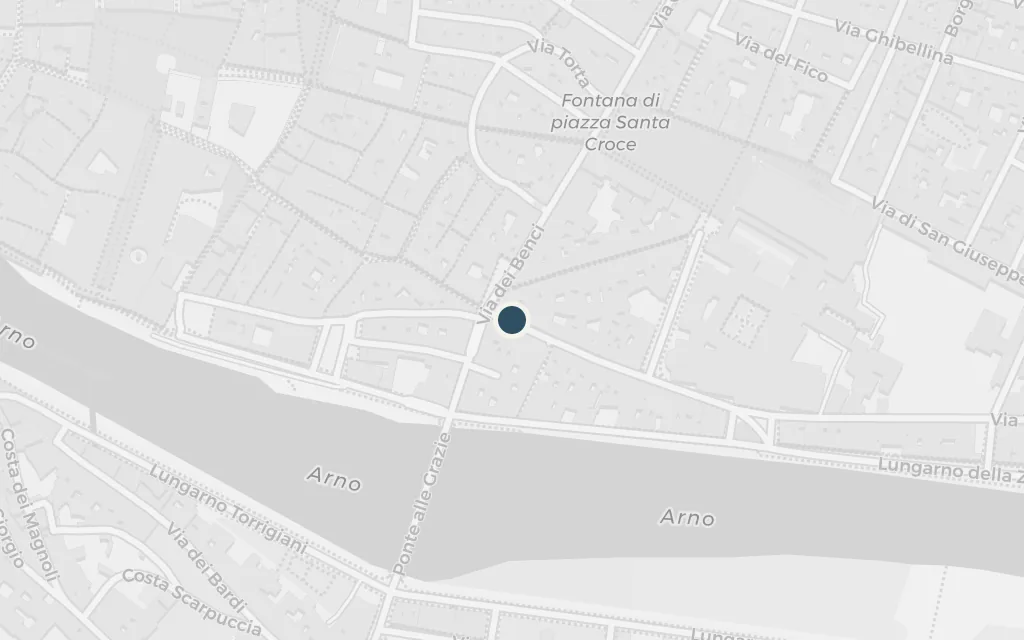
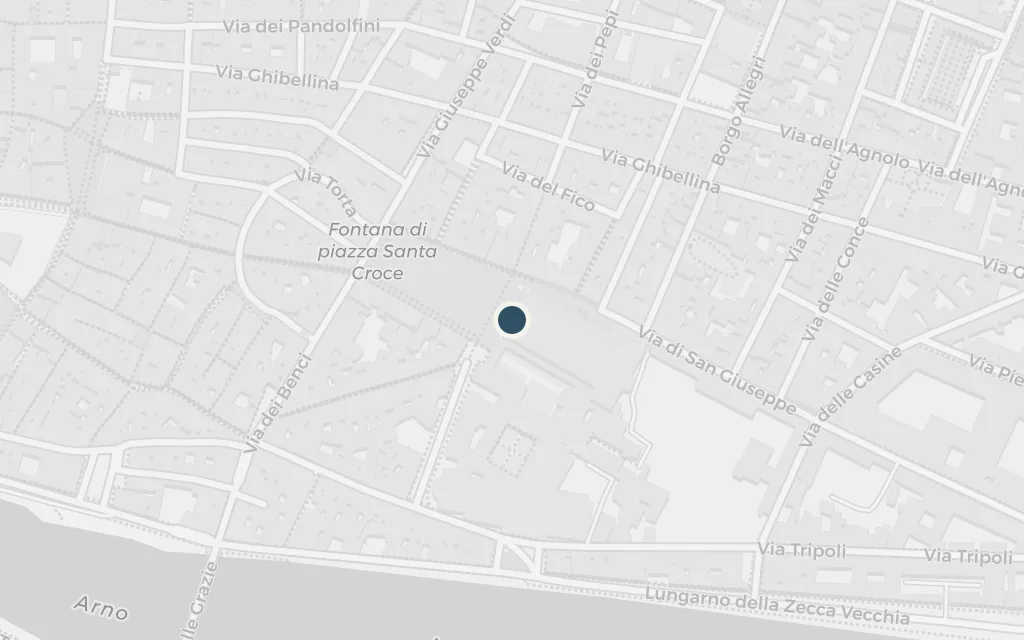
The Pension Bertolini, on the Lungarno

Chapter 1
Map of The Pension Bertolini, on the Lungarno today
Florence today

The novel opens at an English pension on the river, where the heroine is given a room facing a courtyard rather than the Arno she was promised. A fellow guest offers to swap so she can have her view, and the small act of kindness starts everything. Forster set the fictional pension on the embankment he knew from his own stay near Santa Croce.

Chapter 1

inspired byThe Pension Bertolini is invented, but Forster drew it from the Pensione Simi at 2 Lungarno delle Grazie, where he stayed with his mother in 1901; sited on that stretch of the Arno embankment.
Open in Google Maps ↗Street View ↗

Chapter 220% in
Lucy Honeychurch

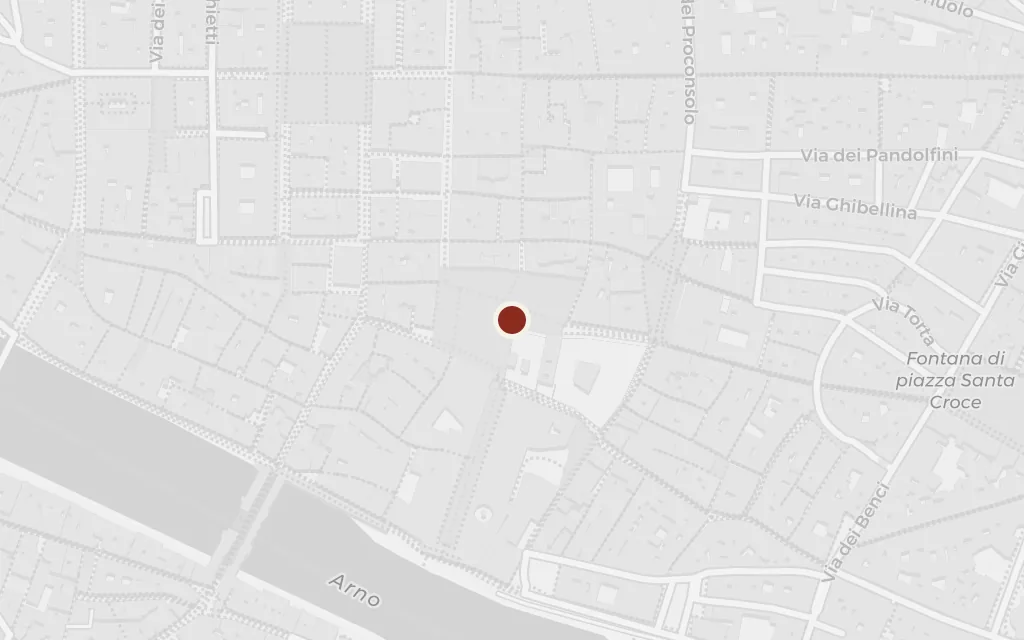
Santa Croce

Chapter 2

Map of Santa Croce today
Florence today

Left without her guidebook, the heroine wanders the Franciscan church of Santa Croce and falls in with the same guest from the pension and his outspoken father. The famous chapel of frescoes becomes the stage for a first, awkward conversation that unsettles her sense of what is proper.

Chapter 2

explicitForster names the church of Santa Croce as the setting of the chapter; sited at the basilica on the Piazza di Santa Croce.

Open in Google Maps ↗Street View ↗

Chapter 440% in
George Emerson

Piazza della Signoria

Chapter 4

Map of Piazza della Signoria today
Florence today

Crossing the great civic square alone, the heroine witnesses a sudden, violent death between two men and faints, and the young man from the pension is there to catch her. The shock in the Piazza della Signoria breaks through her careful composure and binds the two of them together.

Chapter 4

explicitForster names the Piazza della Signoria as the scene of the fainting; sited at the square before the Palazzo Vecchio.

Open in Google Maps ↗Street View ↗

Chapter 660% in
George Emerson

The hillside at Fiesole

Chapter 6

Map of The hillside at Fiesole today
Florence today

A party of English visitors drives up into the hills at Fiesole for an afternoon in the open air. Wandering onto a terrace of violets, the heroine comes upon the young man again, and he kisses her before her chaperone appears. It is the moment the trip has been building toward, and the one she spends the rest of the book denying.

Chapter 6

explicitForster names Fiesole as the destination of the carriage excursion; sited at the hill town above Florence, whose slopes carry the scene's violets.

Open in Google Maps ↗Street View ↗

Part One80% in
Lucy Honeychurch

Piazzale Michelangelo

Part One

Map of Piazzale Michelangelo today
Florence today

The whole of Part One turns on the idea of a view: the river, the domes and the hills the heroine longs to look out over. The panoramic terrace of the Piazzale Michelangelo, laid out above the south bank in the 1860s, offers the postcard prospect of Florence that the title keeps circling back to.

Part One

inferredThe novel prizes the view over Florence but does not name this terrace; the panoramic Piazzale Michelangelo stands in for the city's celebrated outlook that gives the book its title.

Open in Google Maps ↗Street View ↗

Chapter 8100% in
Lucy Honeychurch

Summer Street and Windy Corner, Surrey

Chapter 8

Map of Summer Street and Windy Corner, Surrey today
Florence today

Part Two moves home to the Weald, to a village called Summer Street and the heroine's family house on a windy ridge. When the young man from Florence turns up as a neighbour, the emotions she thought she had left in Italy return. The country stands in for the real Surrey hills around Holmbury St Mary, a landscape Forster knew well.

Chapter 8

inspired bySummer Street and the house called Windy Corner are invented, but the village is generally identified with Holmbury St Mary in the Surrey hills near Dorking, where Forster had family ties; sited at that village. Outside the Florence setting by design.

Open in Google Maps ↗Street View ↗