The Colombo of Anil's Ghost

Ondaatje's Sri Lanka is a country under the pressure of civil war in the late 1980s and early 1990s, seen through a forensic investigation. The map runs from the capital, Colombo, up the central axis to the ancient Buddhist ruins and monasteries of the north-central plain and out to the tea-country hills, where the war's disappearances surface as bones.

Author
Michael Ondaatje, 2000
Places
5

Open the interactive map →

Arrival0% in
Anil Tissera

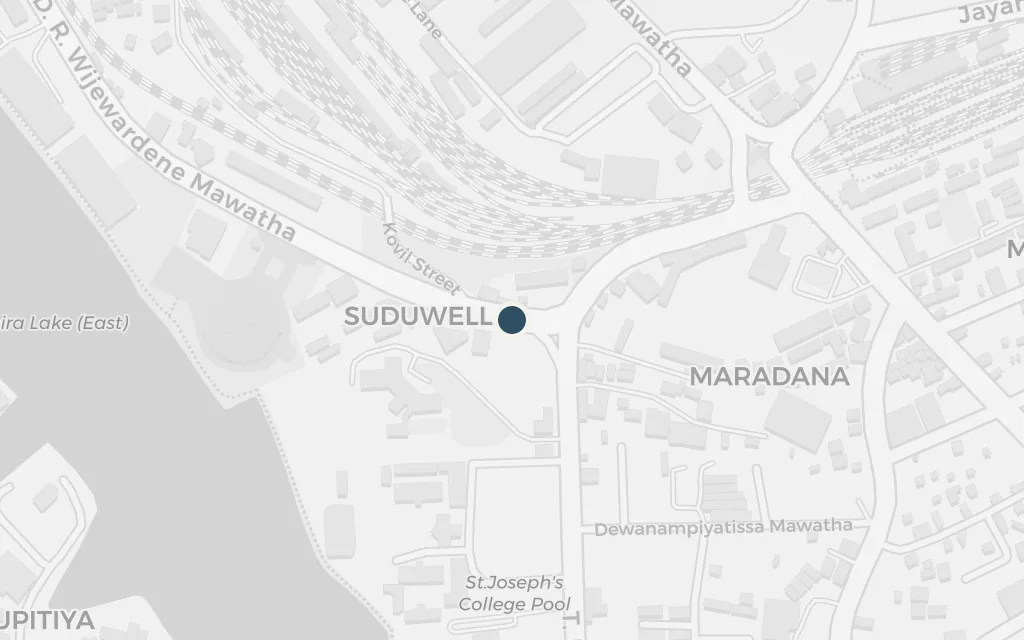
Colombo

Arrival

Map of Colombo today
Colombo today

A forensic pathologist trained abroad flies home to Sri Lanka on a human-rights posting and sets up in a laboratory attached to an old archaeological base in the capital. Colombo is where the assignment begins and where the pressure of a government keen to control the findings is first felt.

Opening section

explicitColombo is named in the novel as the point of return and the base of the investigation; sited at the city centre, since the archaeological headquarters and its makeshift laboratory are not tied to a single verifiable address.
Open in Google Maps ↗Street View ↗

The skeleton25% in
Anil Tissera

The reserve near Bandarawela

The skeleton

Map of The reserve near Bandarawela today
Colombo today

In a state-protected archaeological reserve in the tea-country hills, where old skeletons lie in natural rock hollows, the investigators find one set of remains that is far more recent than the rest. Nicknamed Sailor, it was buried elsewhere first and moved here, which points to a killing the authorities would rather keep hidden.

Sarath section

inferredThe novel names Bandarawela and places the burial in a government-protected zone among natural rock hollows, but does not give a mapped point for the grave; this marks the hill town as a representative location for the reserve.

Open in Google Maps ↗Street View ↗

The estate50% in
Anil Tissera

The walawwa in the hills

The estate

Map of The walawwa in the hills today
Colombo today

Working mostly in secret, the group retreats to a crumbling ancestral manor house, a walawwa, in the hills, where a local artificer is brought in to rebuild the dead man's face from the skull. The old house becomes a workshop and a hiding place, away from the eyes of the state.

Ananda section

inspired byThe manor house on an old family estate is not tied to a named or verifiable location; this marks a representative point in the same upland region, west of Bandarawela, and is inspired by the highland walawwa tradition rather than a specific house.

Open in Google Maps ↗Street View ↗

The ancient north75% in
Anil Tissera

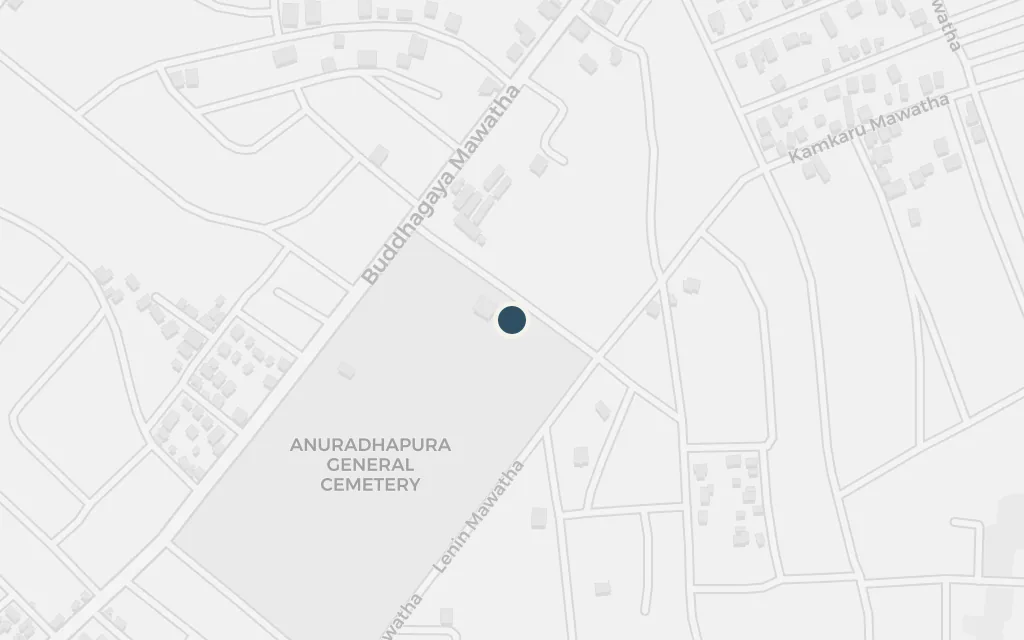
Anuradhapura

The ancient north

Map of Anuradhapura today
Colombo today

The trail runs north to the ruined stupas, tanks and forest monasteries of the old royal capital, where a blind, disgraced epigraphist once mentored the archaeologist now leading the case. This is the deep-time Sri Lanka of rock inscriptions and Buddhist heritage that the novel sets against the war's fresh graves.

Palipana section

explicitThe ancient ruins and forest monasteries of the Anuradhapura region are named in the novel as the world of the archaeologist mentor; sited at the ancient city, a UNESCO World Heritage site.

Open in Google Maps ↗Street View ↗

The eyes100% in
Anil Tissera

The great Buddha statue

The eyes

Map of The great Buddha statue today
Colombo today

The novel ends away from the investigation, with a stonemason restoring a huge Buddha statue shattered by looters and then painting in its eyes in the old consecration rite. It is a quiet act of repair set against a country full of the dead, and it stands in for the giant rock-cut Buddhas of the north-central plain.

Closing section

inspired byThe colossal Buddha that a stonemason restores at the close of the novel is not identified with a named monument; this marks the Avukana Buddha, a famous rock-carved standing Buddha in the same north-central region, as a representative site.

Open in Google Maps ↗Street View ↗