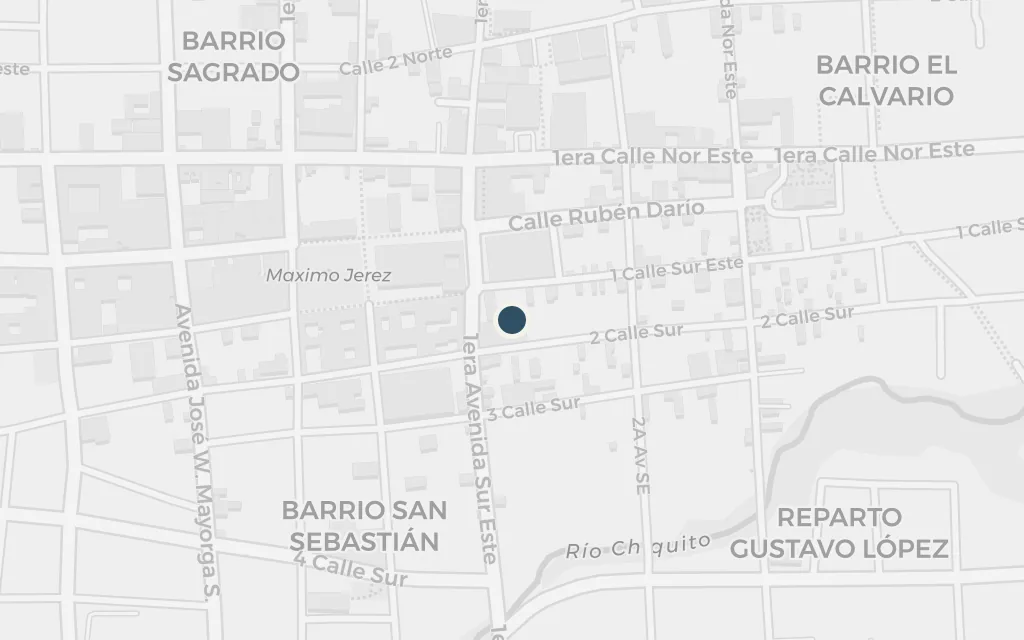
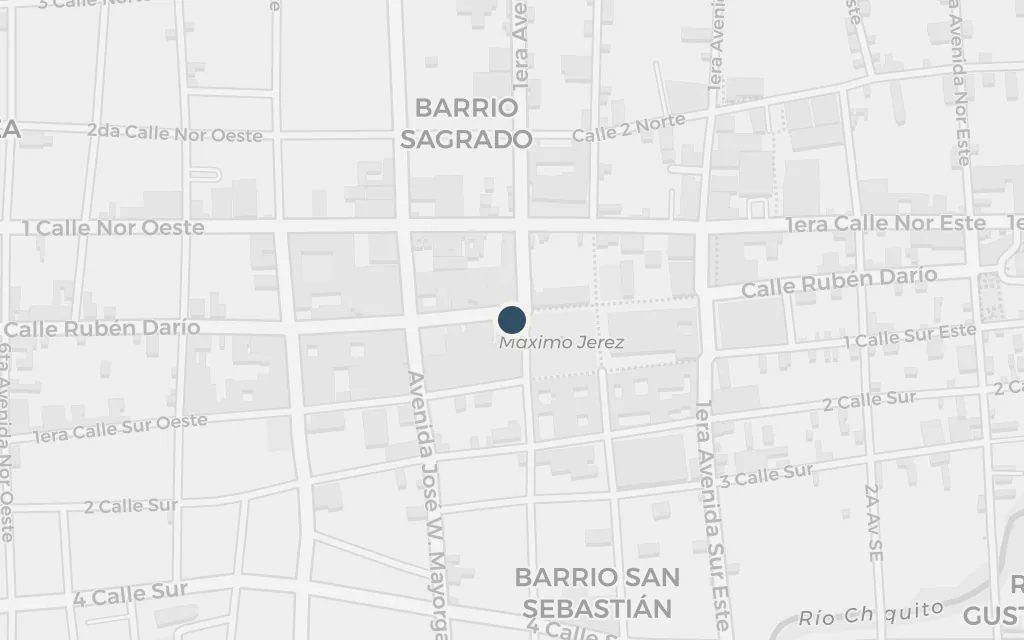
The provincial León of the early Somoza years, mapped through a sensational poisoning trial: a compact colonial grid of cathedral and plaza, courthouse and pharmacy, the grand houses of the local elite and the railway station that ties the town to the coast. Ramírez maps a real city, and the map keeps to its streets.
The largest cathedral in Central America presides over the town the novel dissects. Its bulk and its bells set the rhythm of León's public life, and the funerals that drive the case pass through its shadow. Ramírez roots his invented court record in a city anyone can still walk.
The city of León
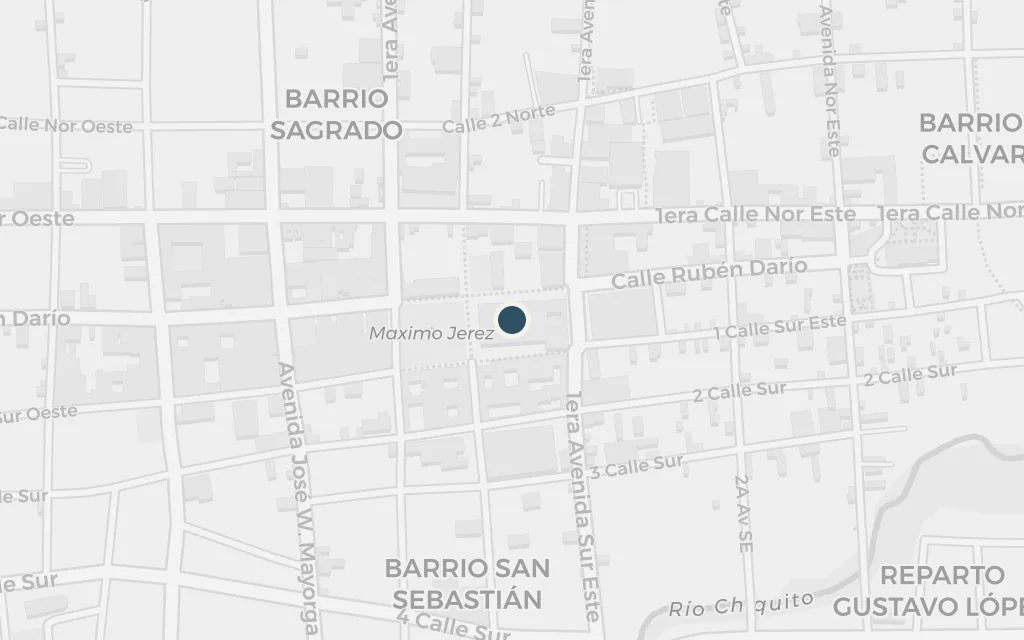
explicitThe cathedral, the Real e Insigne Basílica de la Asunción, is a named, still-standing landmark; sited at the building itself.
The open square on the cathedral's north flank is where a provincial town does its watching and its gossiping. In a story built from rumour, testimony and reputation, the plaza is the stage on which the accused is judged long before any verdict, and where the town gathers to follow the scandal.
The city of León
explicitLeón's central park, the Parque Central beside the cathedral, is a real and unmoved public square; sited at the plaza.
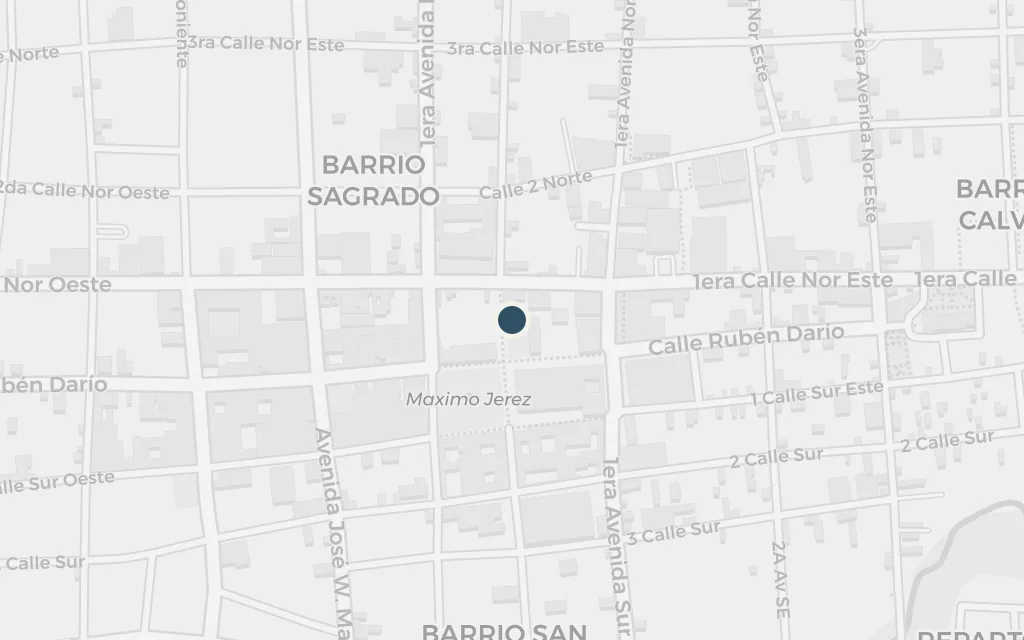
The novel is assembled like a case file: depositions, expert reports, judge's rulings. The court of León is its spine, the room where the charismatic defendant is tried for a chain of poisonings and where Ramírez lets legal procedure expose a whole society. The judicial seat sits on the central plaza, at the town's civic heart.
The trial
explicitThe novel is a courtroom book set in León's real court; sited at the Palacio de Justicia on the northwest side of the central plaza. The judicial building the 1933 case used is not preserved as a distinct museum, so the plaza-side courthouse stands for it.
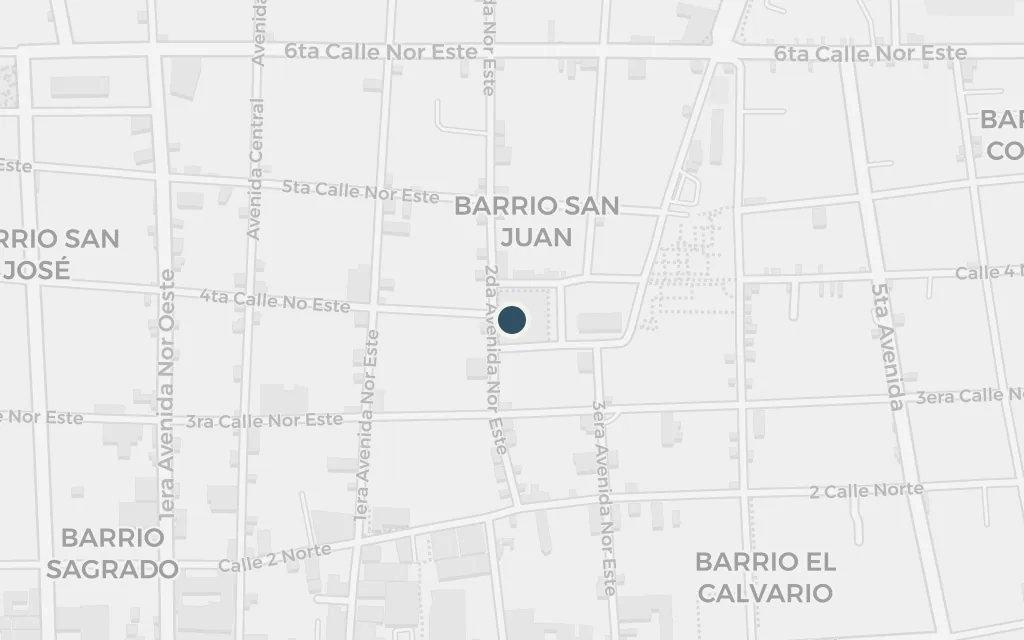
The station opened in 1882 and for a century tied León to the Pacific coast and the capital. It is the town's door to the wider world, the point through which people, news and the machinery of a national scandal arrive and leave. It stands near the San Juan market on the northern edge of the old town.
The city of León
explicitLeón's old station, the Antigua Estación del Ferrocarril, is a documented real building near the San Juan church and market; sited by that descriptive location, two blocks north of the church's northeast corner.
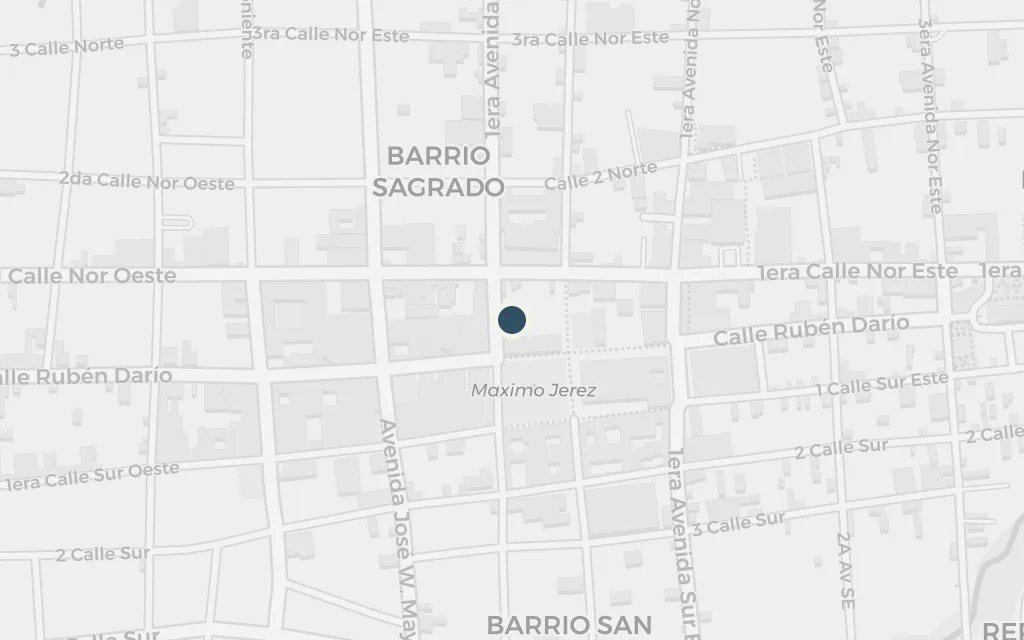
Much of the poisoning drama unfolds inside the tall-ceilinged home of a prominent local family, the kind of colonnaded house that lines León's central streets. These private interiors of the provincial elite are where the deaths occur and where the novel's suspicion gathers. The house stands for the whole social world the trial pulls apart.
The city of León
inferredThe specific mansion of the case's leading family is not identified as a marked landmark, so this sites a representative point on Calle Real, the old main street a block south of the cathedral, where León's grand houses stand.
A pharmacy anchors the medical thread of the case: where a lethal compound could be bought or dispensed, and where druggists and doctors give the testimony that turns a run of deaths into a criminal charge. León's boticas clustered near the plaza, part of the same tight commercial grid as the court and the cathedral.
The city of León
inferredThe particular botica where the poison is traced is not preserved as a named site, so this sites a representative point among the old commercial streets just west of the central plaza, where León's pharmacies stood.