The Paris of Father Goriot

Balzac's Paris of 1819, climbed one address at a time. The shabby Maison Vauquer stands in the poor Latin-Quarter streets behind the Panthéon; from there Rastignac reaches up to Mme de Beauseant's salon in the Faubourg Saint-Germain and the new money of the Chaussee d'Antin, and buries Goriot on the heights of Pere-Lachaise. Balzac maps the whole social ladder onto real streets, and it brings the founder of the realist novel into the atlas.

Author
Honoré de Balzac, 1835
Places
5
Accent colour
“gilded salons”

Open the interactive map →Visit Paris on Wikivoyage ↗

The Maison Vauquer1% in
Father Goriot

The Maison Vauquer, Rue Neuve-Sainte-Genevieve

The Maison Vauquer · 1% through the novel
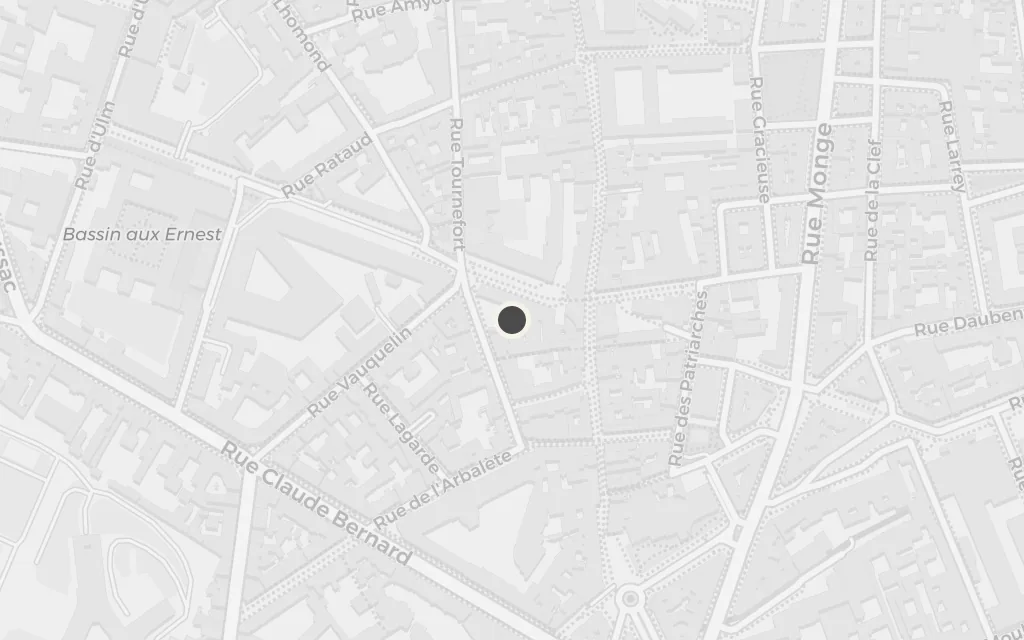
Map of The Maison Vauquer, Rue Neuve-Sainte-Genevieve today
Paris today
It is still standing in the lower end of the Rue Nueve-Sainte-Genevieve, just where the road slopes so sharply down to the Rue de l'Arbalete, that wheeled traffic seldom passes that way, because it is so stony and steep.

The whole novel starts in this cheap boarding house on a stony, steep back street, where the retired vermicelli-maker Goriot rents the meanest room and Rastignac the garret above him. Balzac opens by insisting the address is real, the poorest quarter of the city, framed between the domes of the Panthéon and the Val-de-Grace.

inspired byThe boarding house is invented, but Balzac plants it on a real street: the Rue Neuve-Sainte-Genevieve, renamed the Rue Tournefort in 1864, in the 5th arrondissement behind the Panthéon. Balzac's topographers (Hillairet, Boisseau) place the pension at what is now 30 Rue Tournefort; the pin marks the street.
Open in Google Maps ↗Street View ↗

Entry into society13% in
Eugene de Rastignac

The Faubourg Saint-Germain: Mme de Beauseant's salon

Entry into society · 13% through the novel

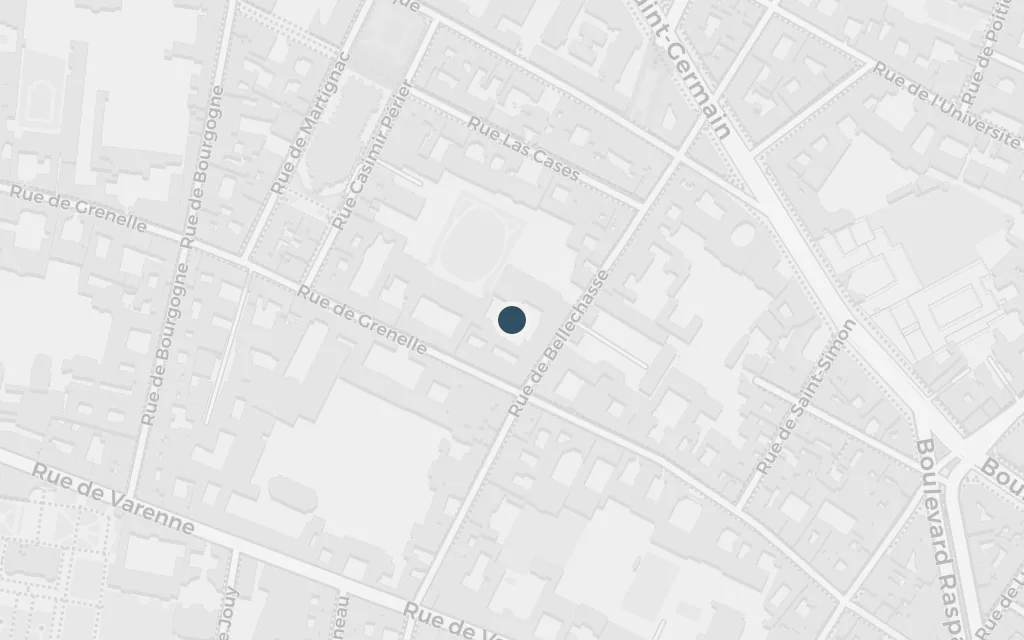
Map of The Faubourg Saint-Germain: Mme de Beauseant's salon today
Paris today
To set foot in the Vicomtesse de Beauseant's house in the Faubourg Saint-Germain; to fall on your knees before a Comtesse de Restaud in the Chaussee d'Antin; to look at one glance across a vista of Paris drawing-rooms, conscious that, possessing sufficient good looks, you may hope to find aid and protection there in a feminine heart!

Rastignac's aristocratic cousin, the Vicomtesse de Beauseant, keeps the pleasantest house in the Faubourg Saint-Germain, the old-nobility quarter on the Left Bank around the Rue de Grenelle. Her salon is his door into society, and it is here she teaches him the ruthless lesson that fixes his ambition. The pin marks the heart of the faubourg.

explicitNamed directly in the text.

Open in Google Maps ↗Street View ↗

The Nucingens' Paris50% in
Eugene de Rastignac

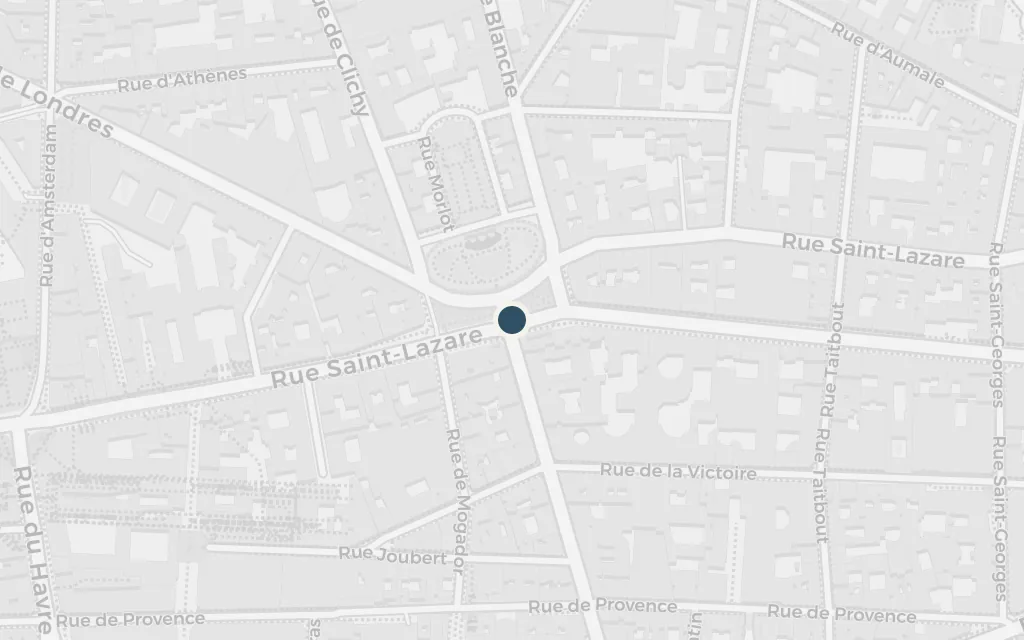
The Chaussee d'Antin: Delphine de Nucingen's house, Rue Saint-Lazare

The Nucingens' Paris · 50% through the novel

Map of The Chaussee d'Antin: Delphine de Nucingen's house, Rue Saint-Lazare today
Paris today
Rastignac reached the house in the Rue Saint-Lazare, one of those many-windowed houses with a mean-looking portico and slender columns, which are considered the thing in Paris, a typical banker's house, decorated in the most ostentatious fashion; the walls lined with stucco, the landings of marble mosaic.

Across the river in the new-money Chaussee d'Antin, Goriot's younger daughter Delphine has married the banker Baron de Nucingen and lives in this ostentatious house on the Rue Saint-Lazare. Rastignac makes her his mistress and his ladder; her father, doting and ruined, helps set them up. The pin marks the Rue Saint-Lazare in the 9th arrondissement.

explicitNamed directly in the text.

Open in Google Maps ↗Street View ↗

Goriot's death95% in
Father Goriot

The Panthéon quarter: Goriot's deathbed

Goriot's death · 95% through the novel

Map of The Panthéon quarter: Goriot's deathbed today
Paris today
“Monsieur le Comte,” said Rastignac, “M. Goriot, your father-in-law, is lying at the point of death in a squalid den in the Latin Quarter. He has not a penny to pay for firewood; he is expected to die at any moment, and keeps calling for his daughter----”

Goriot dies in his cold garret in the Latin Quarter, having sold everything, even his last silver plate, for daughters who will not come. Rastignac goes in vain to their grand houses to beg them to the bedside; both send excuses. The old man's ruin is the price of the two brilliant marriages, and Rastignac watches the whole account come due.

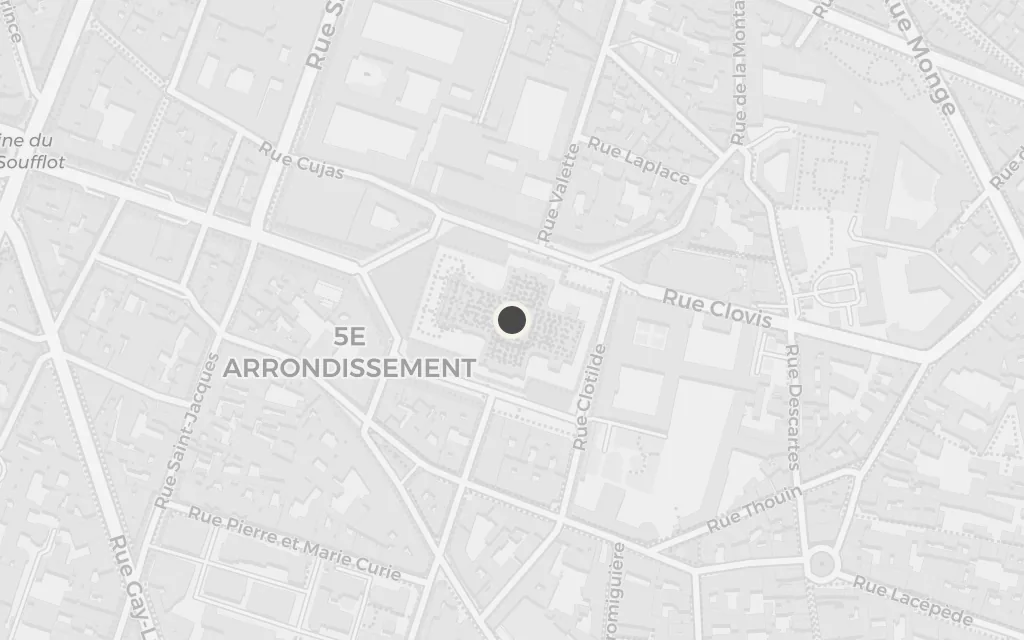
inferredThe deathbed is the Maison Vauquer itself, which the novel calls a squalid den in the Latin Quarter. The pin marks the Panthéon, the landmark Balzac uses in the opening pages to frame this poor quarter, a few streets from the boarding house.

Open in Google Maps ↗Street View ↗

The challenge to Paris99% in
Eugene de Rastignac

Pere-Lachaise: the challenge to Paris

The challenge to Paris · 99% through the novel

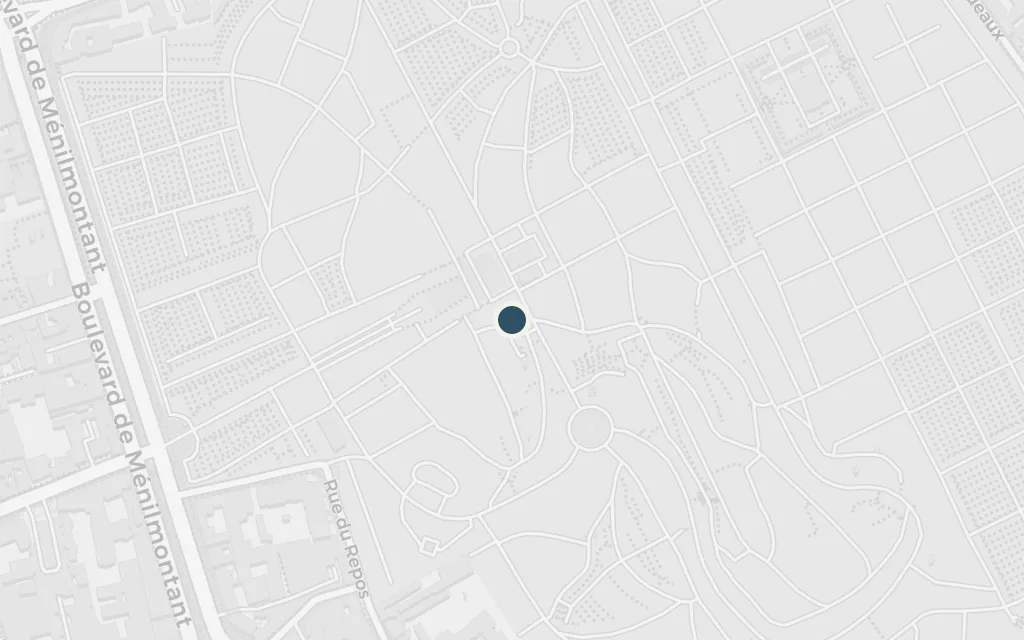
Map of Pere-Lachaise: the challenge to Paris today
Paris today
He went a few paces further, to the highest point of the cemetery, and looked out over Paris and the windings of the Seine; the lamps were beginning to shine on either side of the river. His eyes turned almost eagerly to the space between the column of the Place Vendome and the cupola of the Invalides; there lay the shining world that he had wished to reach. He glanced over that humming hive, seeming to draw a foretaste of its honey, and said magniloquently: “Henceforth there is war between us.”

After Goriot's near-pauper's funeral, Rastignac climbs to the top of Pere-Lachaise on the eastern heights, looks down on the Paris he means to conquer, and throws down his challenge, “A nous deux, maintenant!”, here rendered “Henceforth there is war between us.” Then he goes to dine with Mme de Nucingen. The finale of the novel, and the birth of one of literature's great social climbers.

explicitNamed directly in the text.

Open in Google Maps ↗Street View ↗