The Ferrara of The Garden of the Finzi-Continis

In Ferrara at the end of the 1930s, the narrator, a young Jewish man, is drawn into the walled world of the aristocratic Finzi-Contini family and their vast private garden, where he falls hopelessly in love with the elusive Micòl as the fascist race laws close a ring around them all. Bassani maps his own city: the great garden behind the walls off Corso Ercole I d'Este, the ramparts the young people cycle along, the synagogue on Via Mazzini, and the monumental Jewish cemetery where the book begins and the family's tomb waits.

Author
Giorgio Bassani, 1962
Places
5

Open the interactive map →

Part 20% in
Micòl Finzi-Contini

The Finzi-Contini garden and villa

Part 2
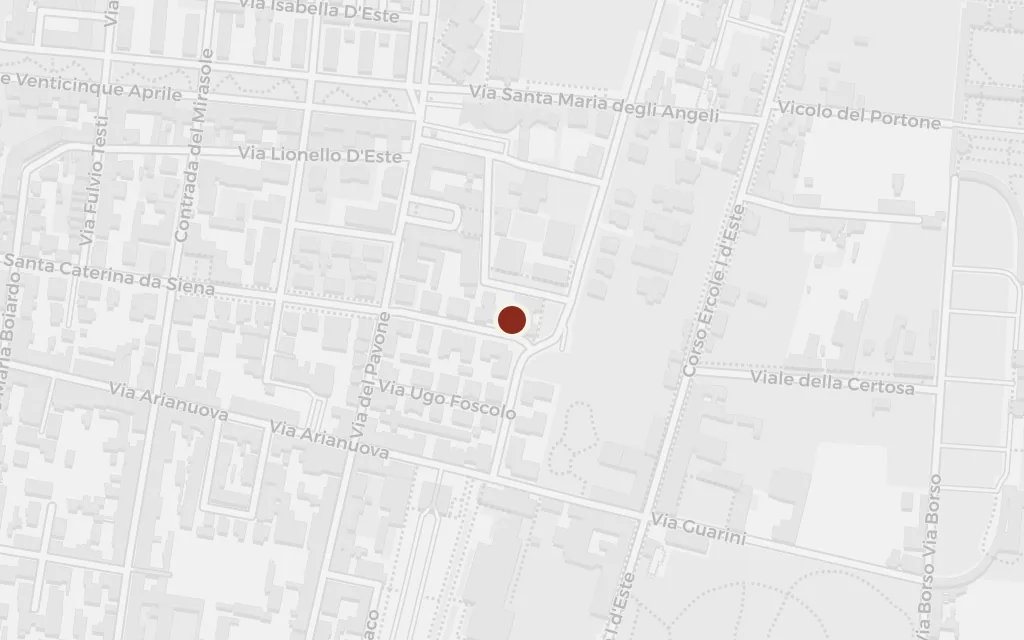
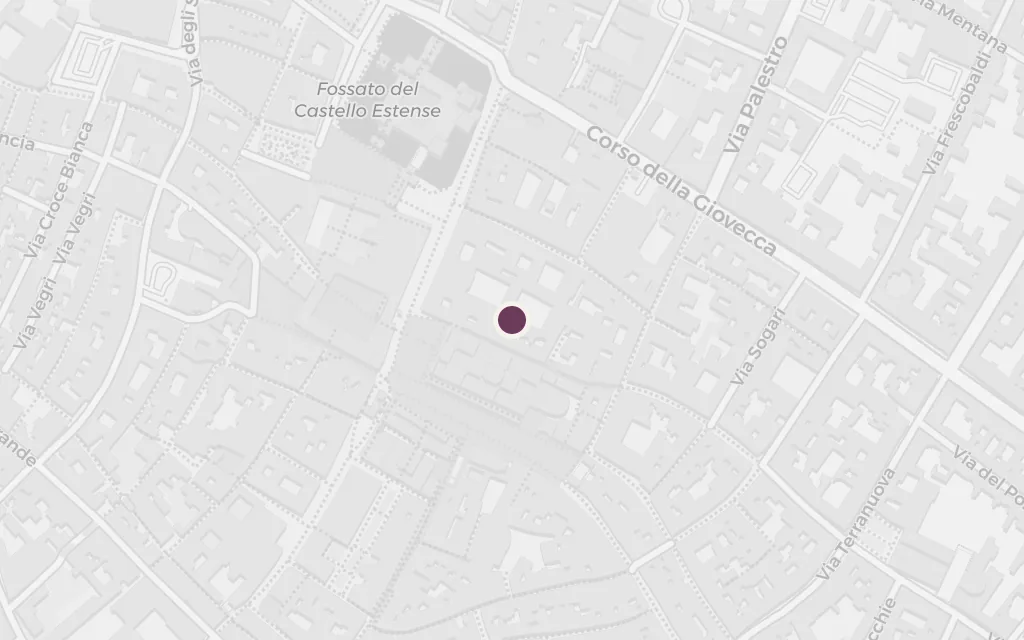
Map of The Finzi-Contini garden and villa today
Ferrara today

Behind a high wall lies the enchanted garden the Finzi-Contini keep for themselves, with its tennis court, its ancient trees and its private world of privilege. When the Jewish young of Ferrara are barred from the town's clubs, Micòl and Alberto open the garden to them, and the narrator's long, hopeless love for Micòl takes root here.

Part 2

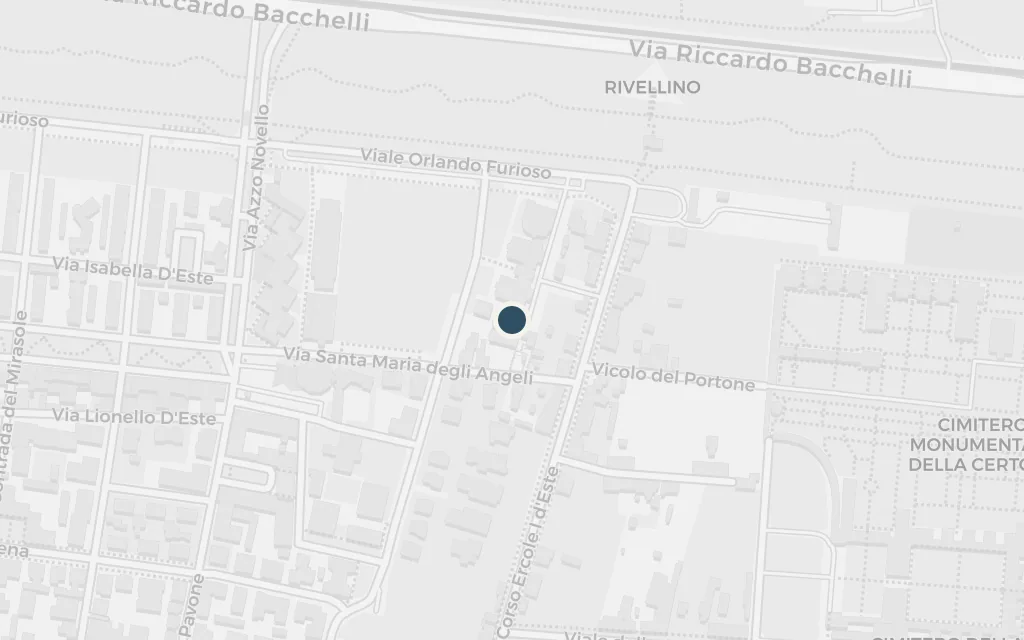
inspired byThe family's vast walled garden and villa, the magna domus, are invented but sited where Bassani places them, along Corso Ercole I d'Este toward the northern city walls of Ferrara.
Open in Google Maps ↗Street View ↗

Part 125% in
The narrator

The Mura degli Angeli (the city walls)

Part 1

Map of The Mura degli Angeli (the city walls) today
Ferrara today

From the grassy ramparts the boy first glimpses Micòl over the garden wall, calling him to climb down and hide his bicycle. The walls, with their long avenues of trees, are Ferrara's open lung and the threshold between the ordinary city and the family's sealed paradise.

Part 1

explicitThe Mura degli Angeli, the real tree-lined Renaissance ramparts on the north side of Ferrara, are where the young people cycle and walk; sited on the walls above the Finzi-Contini garden.

Open in Google Maps ↗Street View ↗

Alberto Finzi-Contini

The synagogue, Via Mazzini

Part 1

Map of The synagogue, Via Mazzini today
Ferrara today

At the synagogue on Via Mazzini the narrator's family and the Finzi-Contini share a faith but little else, the aristocratic family holding themselves aloof in their own school and pew. The old ghetto streets around it are the community's heart, soon to be marked out and destroyed by the race laws.

Part 1

explicitThe Jewish community of Ferrara worships at the synagogue on Via Mazzini in the old ghetto, a real building; the Finzi-Contini keep to their own rite there, apart even from their fellow Jews.

Open in Google Maps ↗Street View ↗

Part 375% in
Giampiero Malnate

Central Ferrara (the race laws)

Part 3

Map of Central Ferrara (the race laws) today
Ferrara today

In the cafés and streets of central Ferrara the narrator argues politics with Malnate, the older Milanese socialist who is also drawn to the garden and, the narrator suspects, to Micòl. The tightening laws of 1938 turn the ordinary city into a place of small daily exclusions that everyone can see coming to something worse.

Part 3

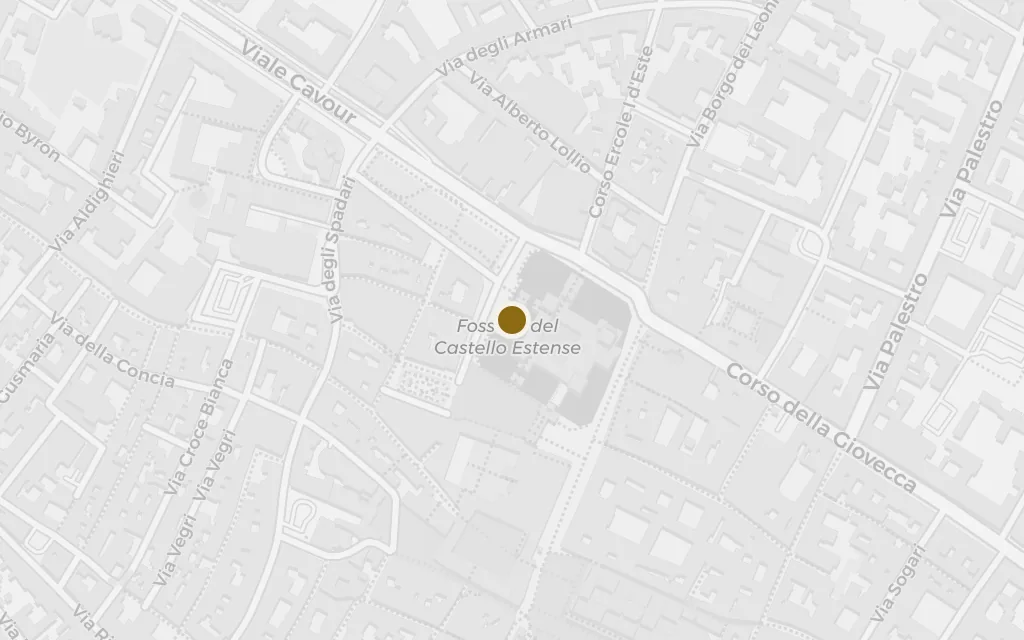
explicitThe city centre around the Castello Estense and Corso Giovecca is where the fascist race laws are felt daily, in expulsions from clubs, schools and cafés; sited in the heart of the real Ferrara.

Open in Google Maps ↗Street View ↗

Prologue100% in
Micòl Finzi-Contini

The Jewish cemetery of Ferrara

Prologue

Map of The Jewish cemetery of Ferrara today
Ferrara today

The book opens at the family's absurd, monumental tomb and closes on the knowledge that almost none of the Finzi-Contini lie in it: deported in 1943, they died in the German camps and have no graves. The cemetery holds the whole elegy, a vanished family and world remembered from the far side of the catastrophe.

Prologue and epilogue

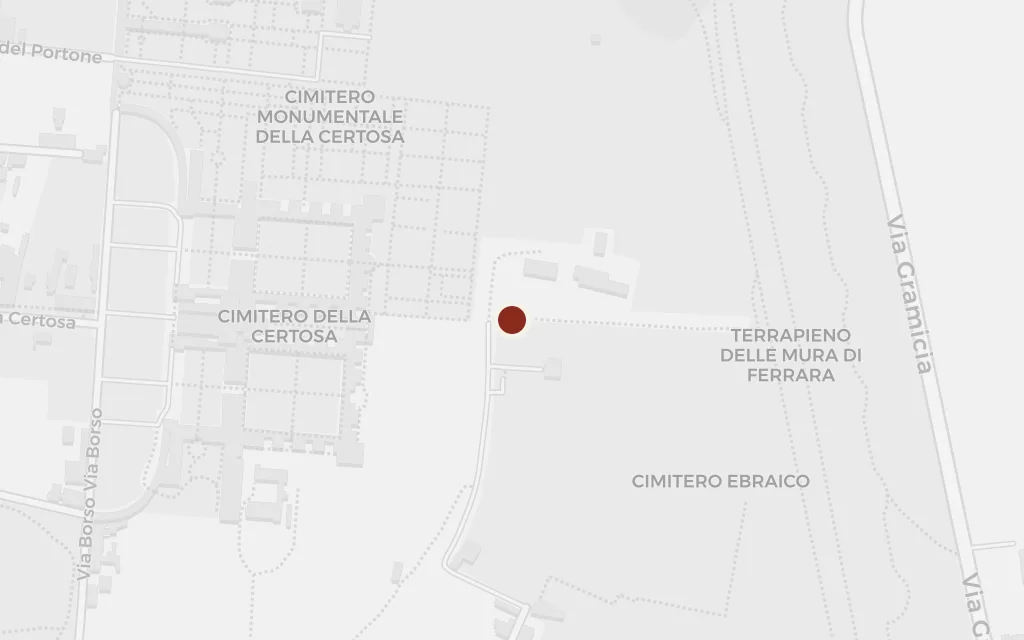
explicitThe monumental Jewish cemetery of Ferrara, near the walls, holds the grandiose Finzi-Contini tomb; the real cemetery frames the novel, which opens among its graves.

Open in Google Maps ↗Street View ↗