The Galicia of The House of Ulloa

A mild young priest, Julián, comes to serve at the decaying manor of Ulloa in the wild Galician countryside, and finds it ruled by the brutish young marquis Don Pedro, his cunning majordomo Primitivo, and the coarse life of the estate. Pardo Bazán's naturalist masterpiece maps a real rural Galicia: the crumbling pazo among the hills, the surrounding hunting country, the city of Santiago de Compostela where Don Pedro takes a gentle wife, and the villages run by the caciques who really hold power.

Author
Emilia Pardo Bazán, 1886
Places
5

Open the interactive map →

Chapter 10% in
Don Pedro

The pazo of Ulloa

Chapter 1
Map of The pazo of Ulloa today
Galicia today

At the crumbling pazo of Ulloa, the young marquis Don Pedro lives a coarse, half-savage life of hunting, drinking and casual violence, more master of dogs than of himself. Into this decaying seat of a decaying aristocracy comes the gentle chaplain Julián, whose horror and helplessness before its brutality drive the book.

The main narrative

inspired byThe decaying manor, the pazo of Ulloa, is drawn from the real fortified country houses of the Galician gentry; it is sited in the hill country of inland Galicia the novel portrays.
Open in Google Maps ↗Street View ↗

The estate25% in
Primitivo

The countryside (the hunt)

The estate

Map of The countryside (the hunt) today
Galicia today

Across the rough hunting country, the sly, ruthless majordomo Primitivo runs the estate for his own profit, holding Don Pedro in his grip and fathering, through his daughter Sabel, the marquis's bastard. Pardo Bazán makes the wild Galician land, all mud, blood and instinct, the naturalist setting in which the human animals of the pazo live out their appetites.

The estate chapters

explicitThe wild hills and woods around the pazo, real Galician hunting country, are the domain of the estate's cunning majordomo Primitivo, who truly rules it; sited in the countryside of the novel.

Open in Google Maps ↗Street View ↗

The marriage50% in
Nucha

Santiago de Compostela

The marriage

Map of Santiago de Compostela today
Galicia today

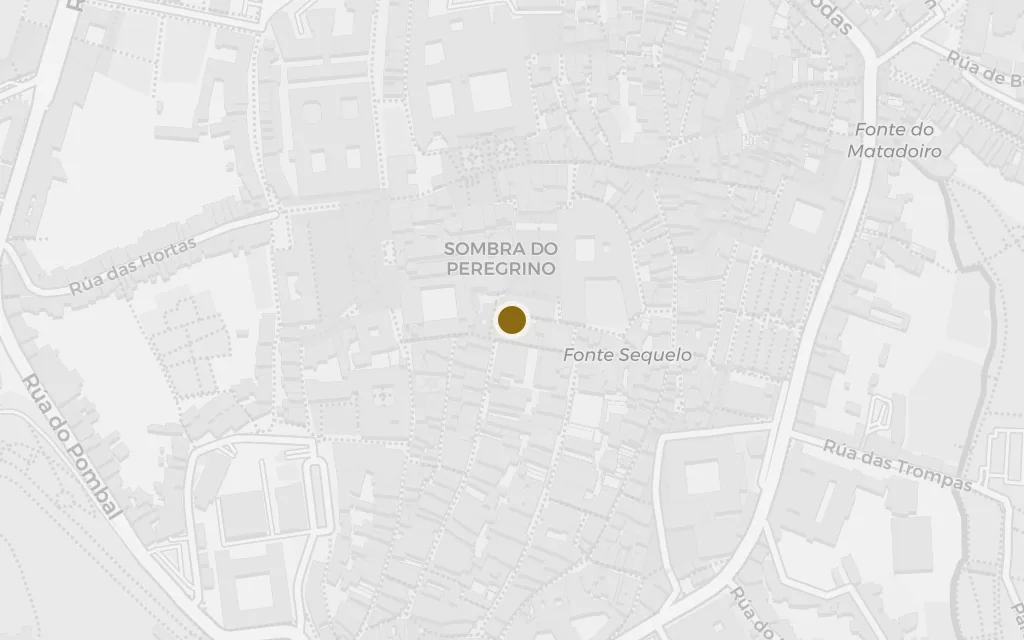
In cultured, pious Santiago, Don Pedro courts and weds his delicate cousin Nucha, carrying her back to the pazo as to a cage. The gulf between the refined city and the brutal manor is the gulf into which the tender, unworldly Nucha vanishes, mistreated and broken by the very savagery she was brought to civilise.

The marriage chapters

explicitDon Pedro travels to Santiago de Compostela, the real Galician cathedral city, to find a wife among his cousins, and marries the gentle Nucha there; the city grounds the novel's contrast of town and country.

Open in Google Maps ↗Street View ↗

The parish75% in
Julián

The village church

The parish

Map of The village church today
Galicia today

The good, ineffectual Julián tries to bring religion and decency to the pazo and its parish, and fails utterly against the sheer animal force of the world around him. His powerless goodness, set against the crude vitality of Don Pedro and Primitivo, is Pardo Bazán's judgement on a Church, and a gentleness, unequal to the harsh reality of rural Spain.

The parish chapters

inferredJulián's priestly duties take him among the parish churches of the district; the church is invented and sited in the real rural Galicia of the novel.

Open in Google Maps ↗Street View ↗

The politics100% in
Don Pedro

The town (the election)

The politics

Map of The town (the election) today
Galicia today

When Don Pedro is drawn into local politics, the novel exposes the caciquismo of Restoration Spain, elections bought, stolen and enforced by the rural bosses. The squalid political machinery of the countryside, as brutal and corrupt as the pazo itself, completes Pardo Bazán's unsparing portrait of a decaying, violent old order.

The election chapters

inferredThe political corruption of caciquismo, in which local bosses rig elections, plays out in the district town; sited in the real rural Galicia the novel anatomises.

Open in Google Maps ↗Street View ↗