Musil's Vienna is the capital of a monarchy he nicknames Kakania, in its last year before the war that will end it. A detached young man drifts through the salons and ministries of an empire busy planning a grand patriotic jubilee that history will never let it hold. The map runs from the Ringstrasse and the imperial Hofburg through the palais quarter of the inner city out to the baroque garden districts where he keeps a small house of his own.
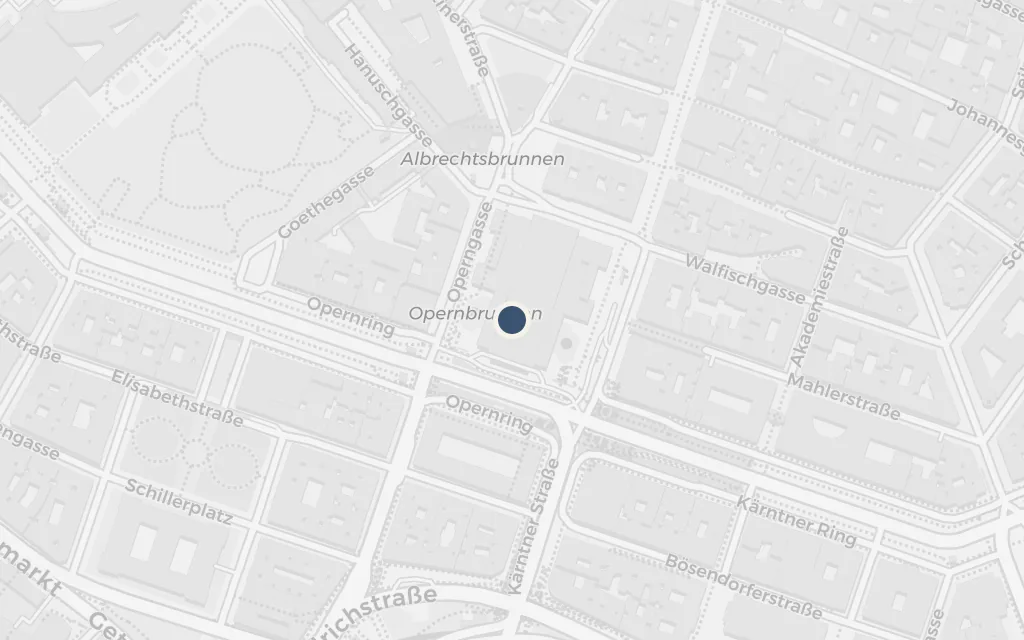
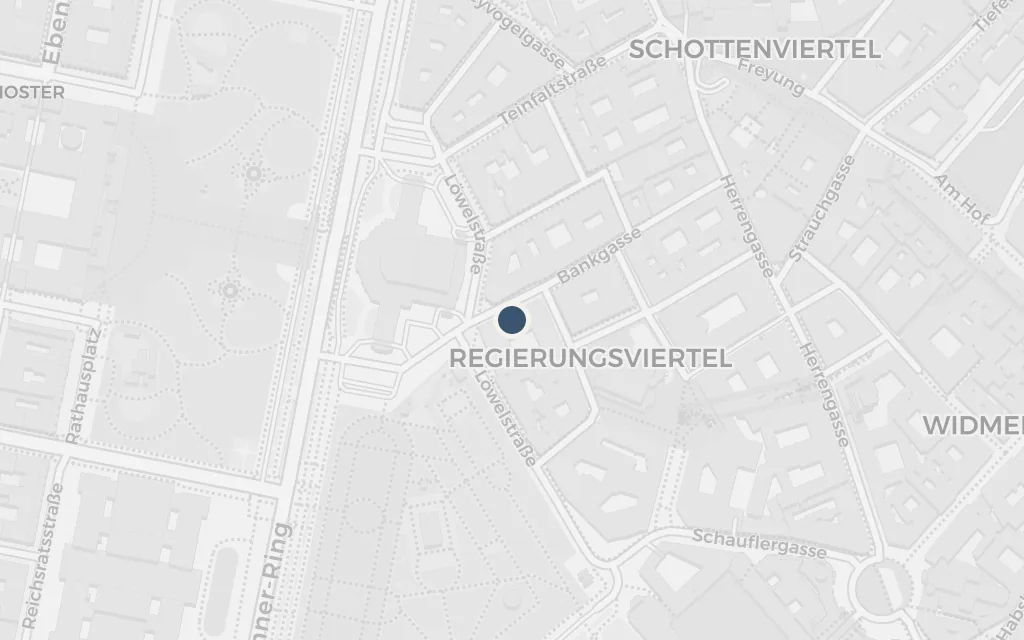
The grand ring boulevard, laid out where the medieval walls once stood, frames the whole novel. Musil opens on its traffic and returns to it as the public face of a capital that mistakes ceremony for purpose. The point sits on the Opernring by the court opera house.
Part One
explicitMusil names the Ringstrasse, the boulevard that follows the line of the old city walls; this marks a representative point on it by the court opera, a stretch he singles out.
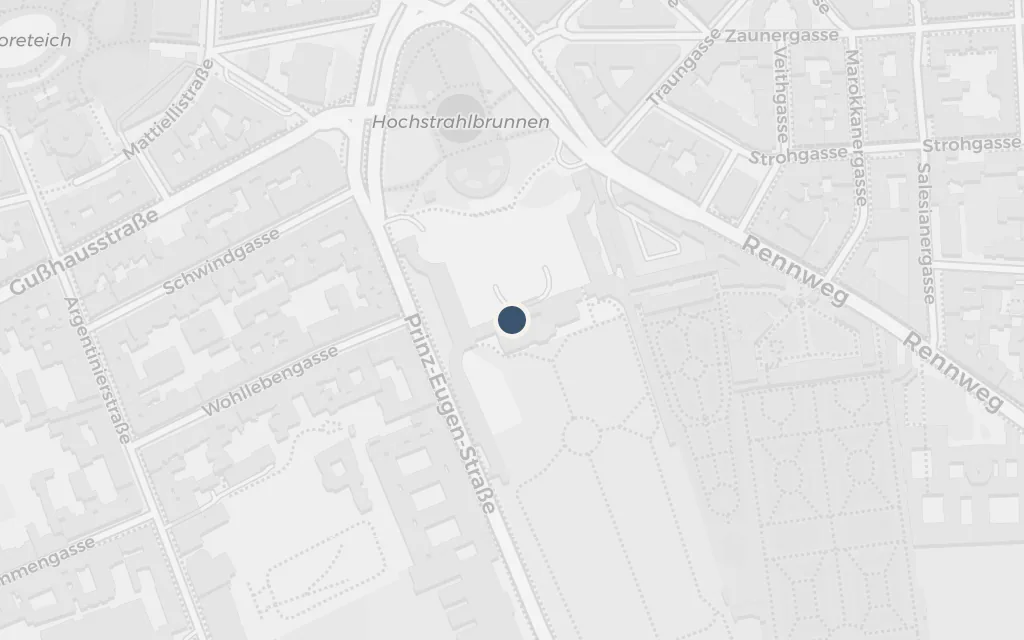
Returning to Vienna, the narrator takes a small run-down palace behind a neglected garden and resolves to spend a year taking stock of his life. The building is fictional; its character belongs to the district of baroque garden palaces on the Landstrasse side of the city, along the Rennweg.
Part One
inspired byMusil describes the narrator renting a small palais with an overgrown garden but names no district; the map anchors it to the baroque garden-palace quarter along the Rennweg, marked here by the Schwarzenberg palace.
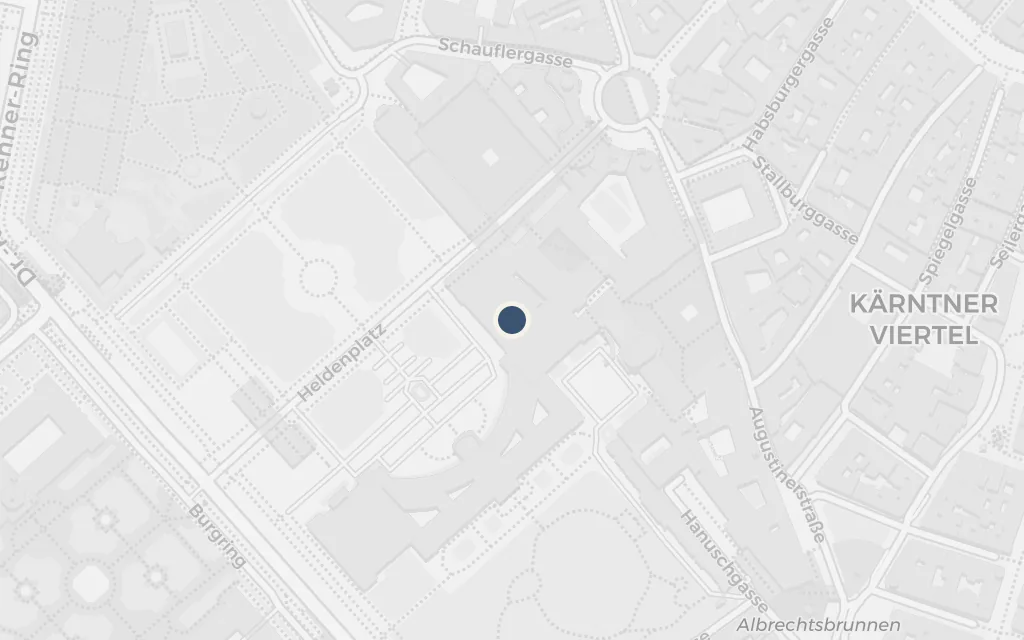
The rambling imperial palace is the still centre the whole story orbits. The scheme that drives the plot exists to honour a jubilee of the aged emperor who lives here, an occasion the narrator lets the reader know the monarchy will not survive to celebrate.
Part Two
explicitThe Hofburg, the emperor's winter residence in the heart of Vienna, is named in the novel and stands where the map places it.
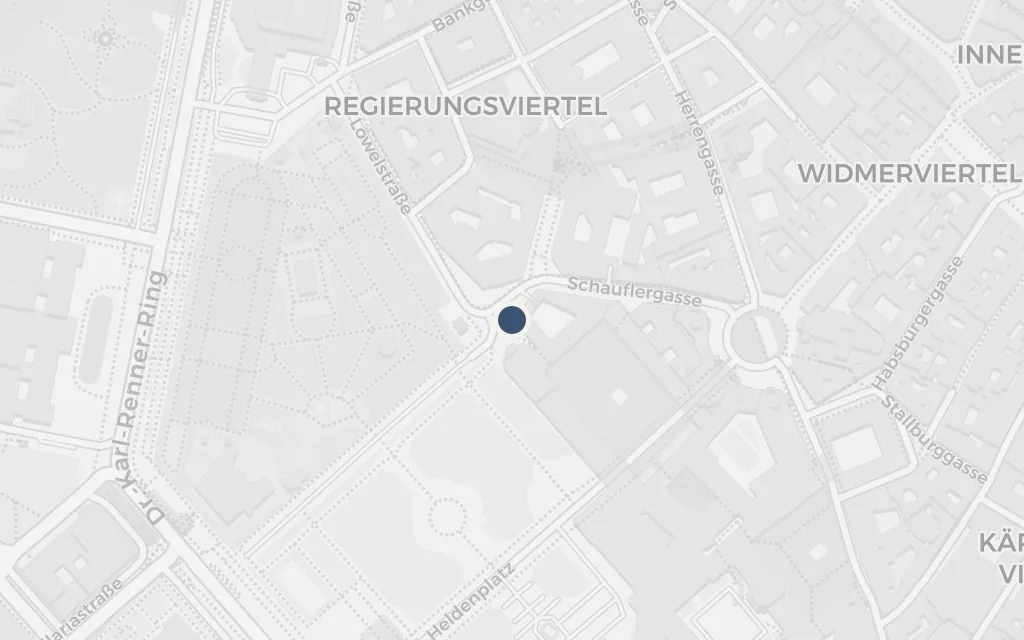
The husband of the narrator's cousin is a senior official at the empire's foreign ministry, and the bureaucratic hush of his world sets the tone for the whole enterprise. The joint ministry of Austria-Hungary occupied the building on the Ballhausplatz, a short walk from the palace it served.
Part Two
inferredThe novel places the section chief Tuzzi at the imperial foreign ministry without giving a street; until 1918 that ministry sat at Ballhausplatz 2, which this marks.
The old conservative nobleman who nominally leads the patriotic scheme receives his callers in a grand town palace, forever unable to decide anything. Musil gives no address; the fitting ground is the cluster of aristocratic palais behind the palace, along streets like the Bankgasse.
Part Two
inspired byThe count and his town palace are invented; the map anchors him to the aristocratic palais quarter around Bankgasse in the inner city, marked here by the Liechtenstein city palace.
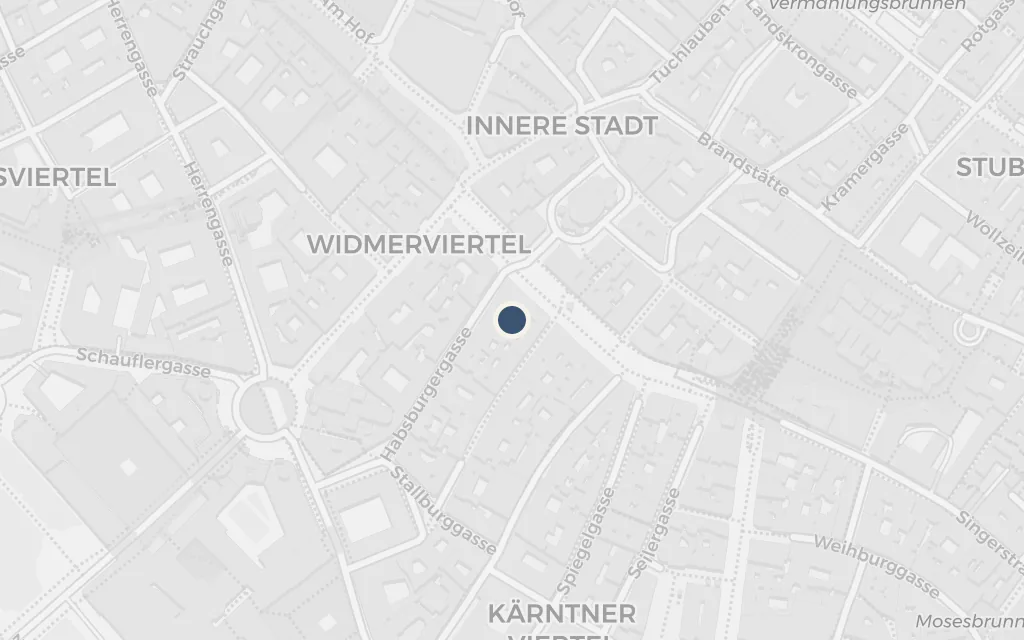
The narrator's cousin, whom he privately dubs Diotima, turns her drawing room into the headquarters of the patriotic scheme, gathering diplomats, generals, poets and cranks under one roof. The rooms are invented, but their world is the fashionable inner city around the Graben.
Part Two
inspired byThe salon is fictional and its address is never given; the map places it in the fashionable heart of the inner city, marked at the Graben, where such a society hostess would have received.