The northern Italian abbey of The Name of the Rose

In 1327 the Franciscan friar William of Baskerville and his young novice Adso arrive at a rich Benedictine abbey in the mountains of northern Italy, where a series of deaths draws them into a labyrinthine library and a deadly secret about a forbidden book. Eco sets his medieval murder mystery at an unnamed monastery in the Ligurian Apennines: the scriptorium where the monks illuminate manuscripts, the great fortress-library of the Aedificium, the church and grounds, and the Inquisition that arrives to twist the search for truth.

Author
Umberto Eco, 1980
Places
5

Open the interactive map →

First day0% in
Adso

The abbey

First day

Map of The abbey today
a northern Italian abbey today

William and Adso climb to a great Benedictine abbey perched in the mountains, wealthy, austere and already uneasy, where a young illuminator has just died in suspicious circumstances. Eco builds his whole world within these walls, a self-contained medieval universe of monks, relics, rivalries and rules into which the outsider William brings the disturbing light of reason.

The first day

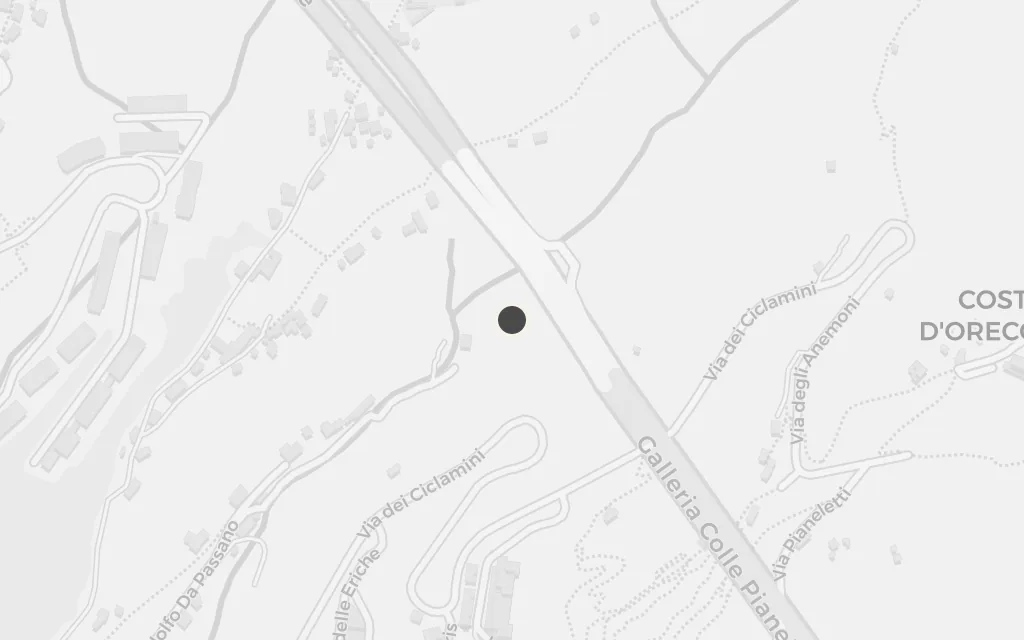
inspired byThe wealthy Benedictine abbey is unnamed in the novel, located by Eco in the mountains of northern Italy between Provence and the Ligurian coast; it is sited in that Apennine region.
Open in Google Maps ↗Street View ↗

The deaths25% in
William

The scriptorium

The deaths

Map of The scriptorium today
a northern Italian abbey today

In the scriptorium the monks bend over their copying and illumination, and one by one the men who work there begin to die, each death seemingly patterned on the visions of the Apocalypse. As William reads the clues among the desks and inks, the room of learning becomes the scene of a mystery whose solution lies locked above it.

The middle days

inspired byThe scriptorium where the monks copy and illuminate manuscripts, and where several die, is drawn from the writing rooms of medieval abbeys; sited within the abbey.

Open in Google Maps ↗Street View ↗

The labyrinth50% in
Jorge

The library (the Aedificium)

The labyrinth

Map of The library (the Aedificium) today
a northern Italian abbey today

At the abbey's heart rises the Aedificium, a labyrinthine library no monk may enter, guarded most fiercely by the blind old Jorge of Burgos. The deaths, William realises, all lead back to a single forbidden book hidden in the maze, and the mystery becomes a duel over whether knowledge, and laughter, should be free or locked away.

The library chapters

inspired byThe great fortress-library of the Aedificium, a labyrinth open only to the librarian, is Eco's invention drawn from the libraries of medieval monasteries; sited within the abbey.

Open in Google Maps ↗Street View ↗

The Inquisition75% in
Bernard Gui

The church and the tribunal

The Inquisition

Map of The church and the tribunal today
a northern Italian abbey today

When the inquisitor Bernard Gui arrives, the search for a murderer curdles into a heresy trial, and reason gives way to torture and the pyre. Eco sets against William's patient inquiry the terrible certainty of the Inquisition, which cares less for truth than for a confession that fits its fears.

The Inquisition chapters

inspired byThe abbey church and the hall where the inquisitor Bernard Gui holds his tribunal are drawn from the settings of the medieval Inquisition; sited within the abbey.

Open in Google Maps ↗Street View ↗

The seventh day100% in
William

The fire

The seventh day

Map of The fire today
a northern Italian abbey today

In the final confrontation in the labyrinth, Jorge would rather destroy the forbidden book, and himself, than let it be read, and the toppled lamp sets the whole library ablaze. Eco ends with the abbey burning for days, its treasures lost, and William's grim lesson that even the defence of truth can breed a fatal, murderous certainty.

The seventh day

inspired byThe catastrophic fire that consumes the library and the abbey closes the novel; sited within the abbey of the setting.

Open in Google Maps ↗Street View ↗