Welsh's Edinburgh is the one the tourist city turns its back on: the tenements, schemes and pubs of Leith and Leith Walk in the late 1980s, where a group of young heroin users drift between deals, dole offices and squalid flats. The map runs down Leith Walk from the New Town to the docks, takes in the great curved council block on Cables Wynd and the derelict station that gives the book its name, and ends with a doomed trip south to London.
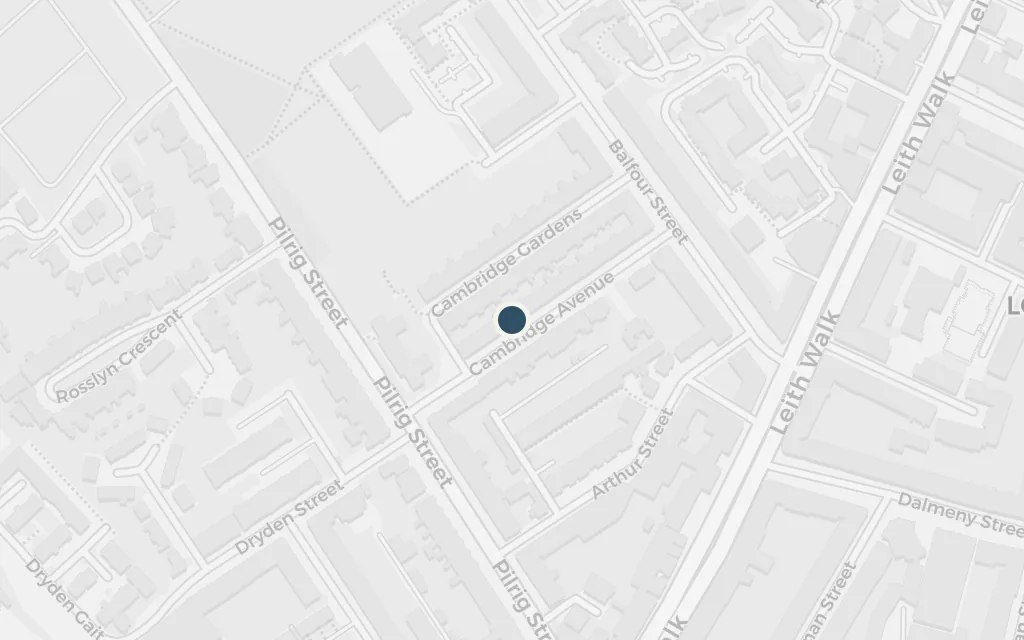
The spine of the book's Leith: a long, downhill street of tenements, betting shops and pubs running from the edge of the New Town to the docks. Welsh's characters live, score, drink and argue along it, and the local speech is written the way it is spoken here. In the late 1980s this was a poor, run-down quarter, well before its later gentrification.
Leith and Leith Walk sections
explicitWelsh names Leith Walk directly; the long street has no single scene, so this marks a representative point on the tenement stretch between the New Town and the foot of the Walk.
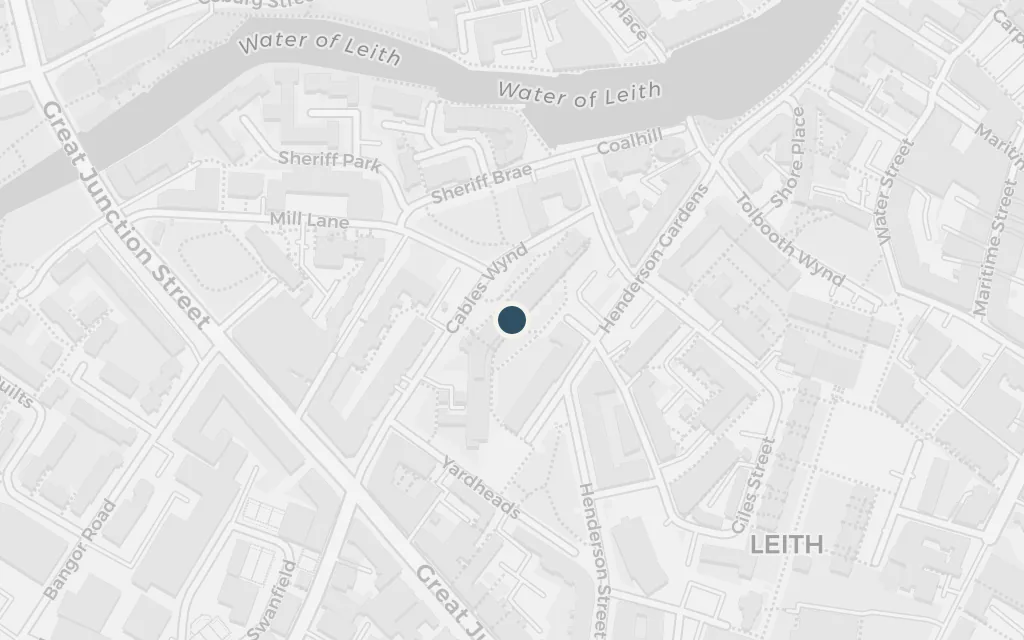
A long, curving nine-storey council block on Cables Wynd, built in the mid 1960s and known to everyone in Leith as the Banana Flats for its shape. It is the home of Simon Williamson, the character called Sick Boy, and has become a landmark of the book's working-class Leith. The building is now category-A listed.
Leith sections
explicitCables Wynd House, nicknamed the Banana Flats for its curve, is a real Leith building and is named in the wider Welsh writing; sited at the block itself.
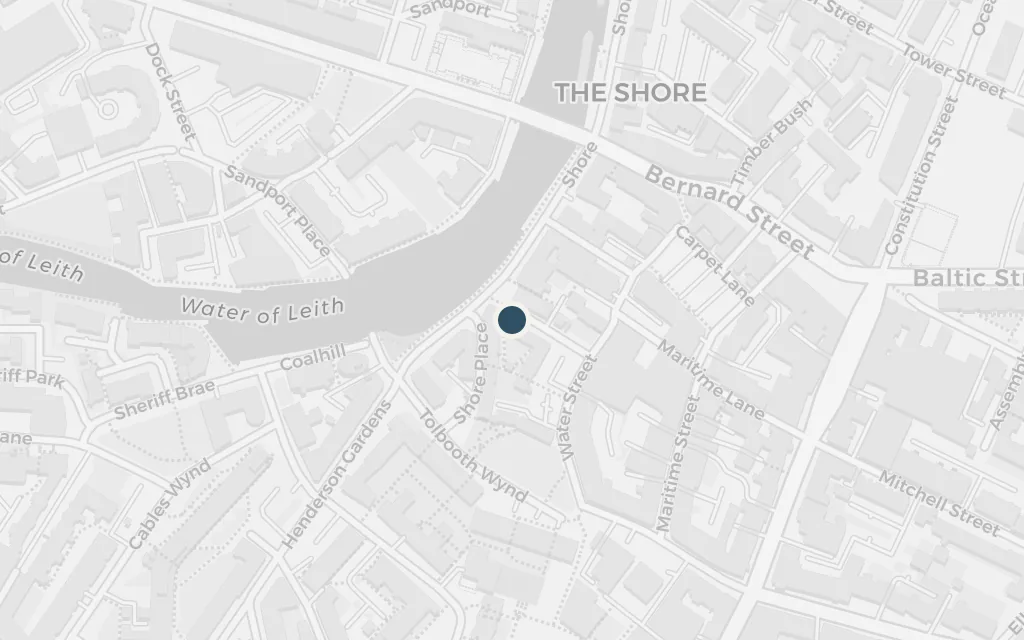
Much of the book happens in Leith's pubs, where the drinking is heavy and the violence, especially around the character Begbie, is never far off. Welsh mixes invented bars with the feel of real ones; the Port o' Leith Bar on Constitution Street was one of the district's best-known dockside pubs of that era, and stands in here for the type.
Leith sections
inferredThe novel's pubs are drawn from Leith's bars but not tied to one address; this marks the Port o' Leith Bar on Constitution Street as a representative example of the old dockside pubs the characters would have used.
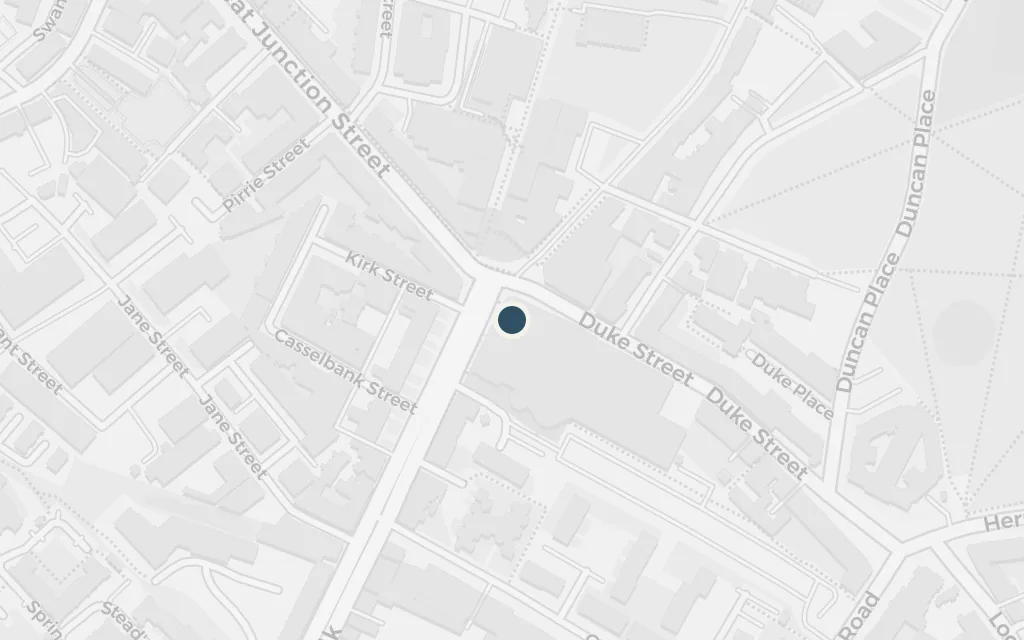
The station that gives the book its title. Leith Central closed to passengers in 1952 and shut completely in 1972, then stood derelict and was used by drug users. In the scene, two characters wander into the empty shed and a drunk old man mockingly asks if they are trainspotting; one of them realises the man is his own father. The site is now a supermarket and leisure building; the clock tower survives.
Trainspotting at Leith Central
explicitThe disused Leith Central station is named in the book and gives it its title; sited at the former station at the foot of Leith Walk.
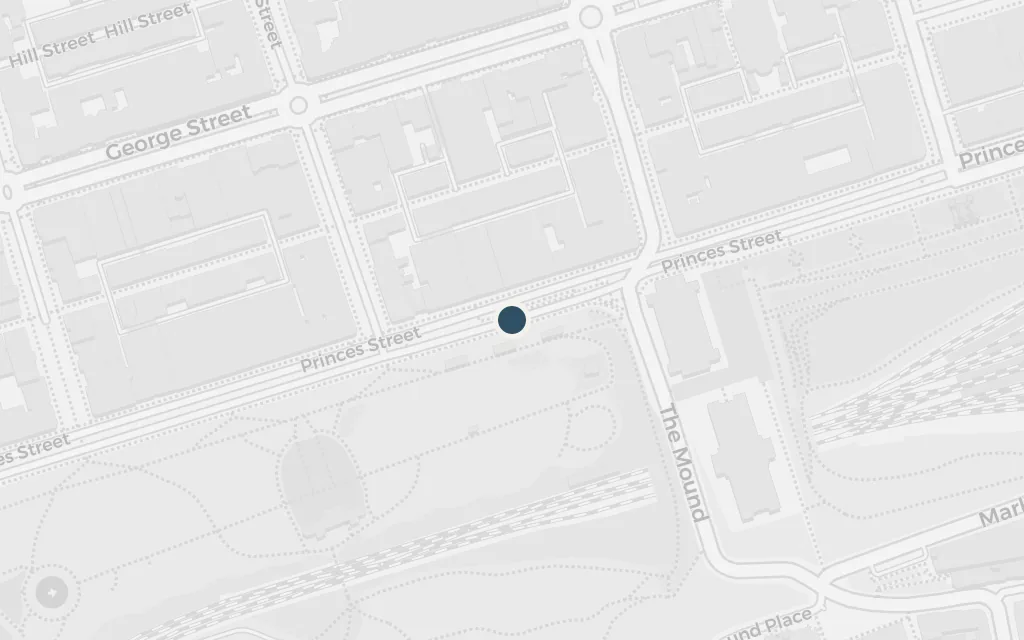
Edinburgh's grand central shopping street, the tourist face of the city, a short walk and a whole world away from Leith. The characters cross into it to shoplift and to move among the respectable crowds, and the gap between this Edinburgh and their own is part of the book's point.
City-centre sections
explicitWelsh names Princes Street, the main street of central Edinburgh; sited on the street itself.
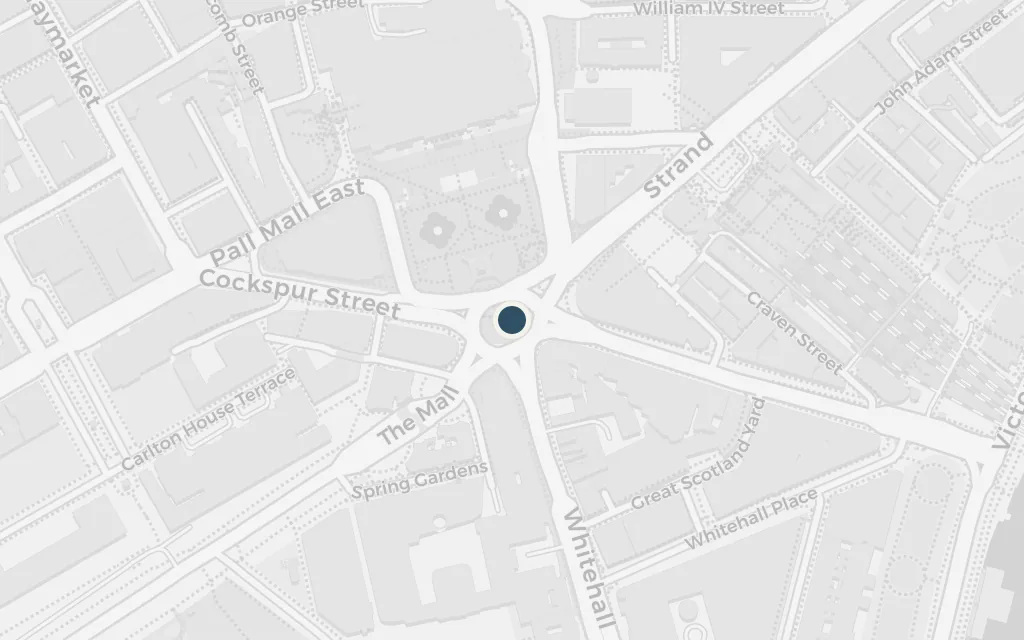
Near the end the story leaves Scotland for London, where the group gathers to sell a large quantity of heroin. Renton, given the chance, walks off with almost all of the money, betraying his friends and setting up the escape that closes the book. London is the exit from Leith, and from the life the book has mapped.
London sections
inferredThe late section moves to London without pinning a single spot; this marks central London as the representative point of the excursion south.