The Vilnius of Vilnius Poker

The Soviet-era Vilnius of a paranoid mind: the capital of occupied Lithuania in the 1970s, its baroque Old Town, its library and its river all watched and warped by an unseen 'Them'. The map holds to the historic centre, from the university library and Cathedral Square up the castle hill to Gediminas Avenue, then renamed for Lenin, and the bend of the Neris.

Author
Ričardas Gavelis, 1989
Places
6

Open the interactive map →

The watched city0% in
Vytautas Vargalys

Vilnius Old Town

The watched city
Map of Vilnius Old Town today
Vilnius today

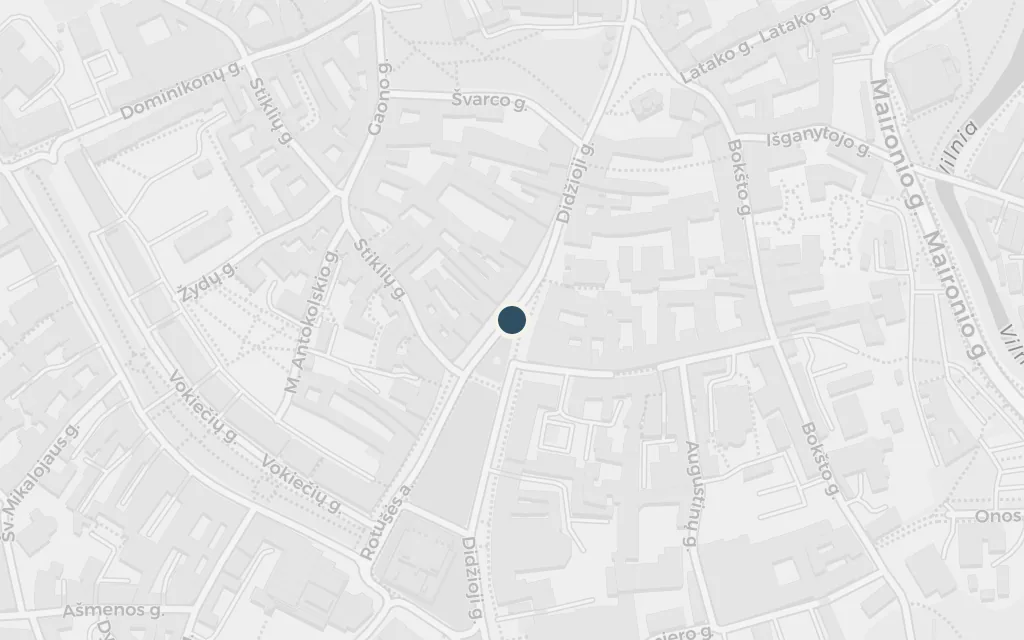
The narrator's Vilnius is the real baroque capital of Soviet-occupied Lithuania, a warren of churches, courtyards and narrow streets that his paranoia turns into a trap. The Old Town is less a backdrop than a character, a city he feels is always being watched and deformed by an unnamed 'Them'.

Vargalys's narration

explicitVilnius and its Old Town are named throughout and are the novel's true subject; this marks the historic centre around the Town Hall as a representative anchor.
Open in Google Maps ↗Street View ↗

The library20% in
Vytautas Vargalys

Vilnius University Library

The library

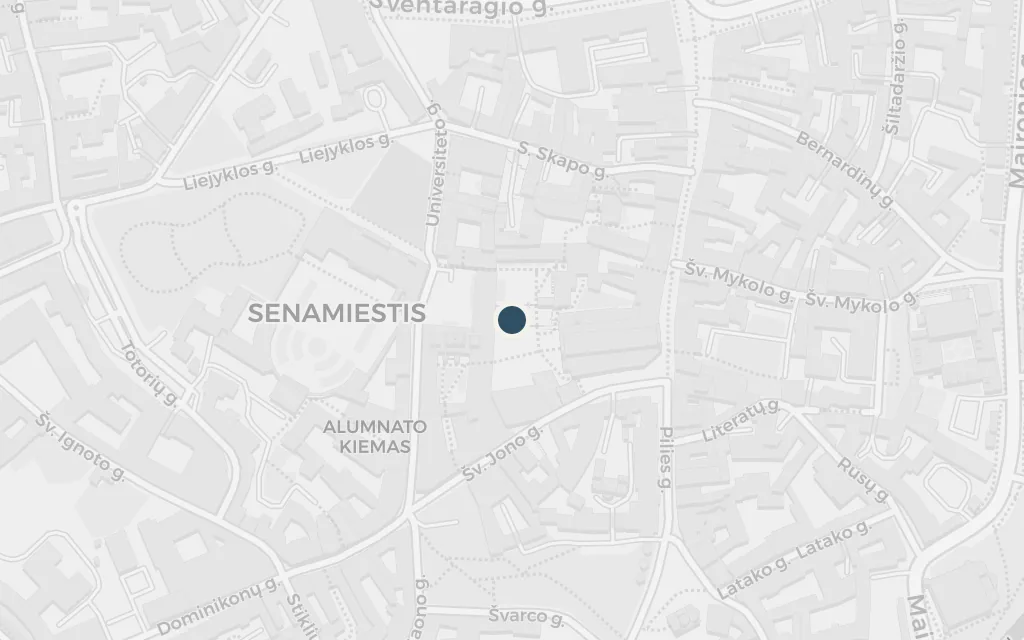
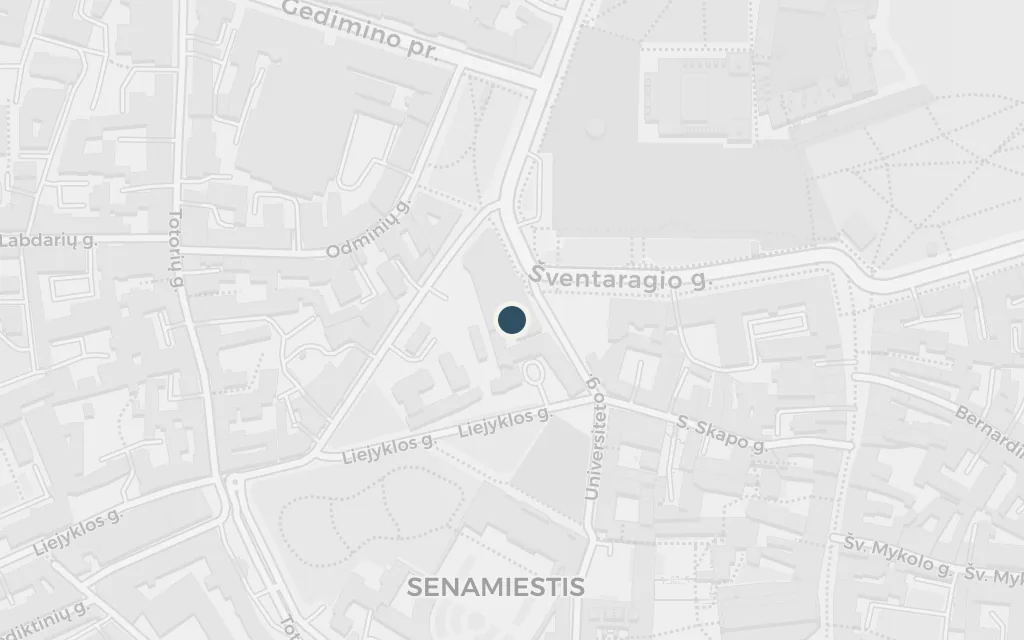
Map of Vilnius University Library today
Vilnius today

Vytautas Vargalys spends his days in a library, cataloguing and compiling, a bookish routine that becomes the still centre of his unravelling. The old university library, one of the oldest in the region, sits inside the university's baroque courtyards in the Old Town and stands here for that world of stacks, colleagues and surveillance.

Vargalys's narration

inferredThe narrator's daily work in a library is central to the book; the historic Vilnius University Library stands for that workplace, though his exact desk and department are not fixed in the text.

Open in Google Maps ↗Street View ↗

The churches40% in
Vytautas Vargalys

Vilnius Cathedral and Cathedral Square

The churches

Map of Vilnius Cathedral and Cathedral Square today
Vilnius today

The great square at the foot of the castle hill, with the neoclassical cathedral and its free-standing bell tower, is one of the fixed points of the narrator's city. Under the occupation it was a stage for parades and power, and in the novel the baroque and classical churches of Vilnius read as survivals watched with suspicion.

Vargalys's narration

explicitThe cathedral and the city's churches are named landmarks of the mapped Old Town; this marks Cathedral Square in front of the cathedral.

Open in Google Maps ↗Street View ↗

The hill60% in
Vytautas Vargalys

Gediminas Tower and Castle Hill

The hill

Map of Gediminas Tower and Castle Hill today
Vilnius today

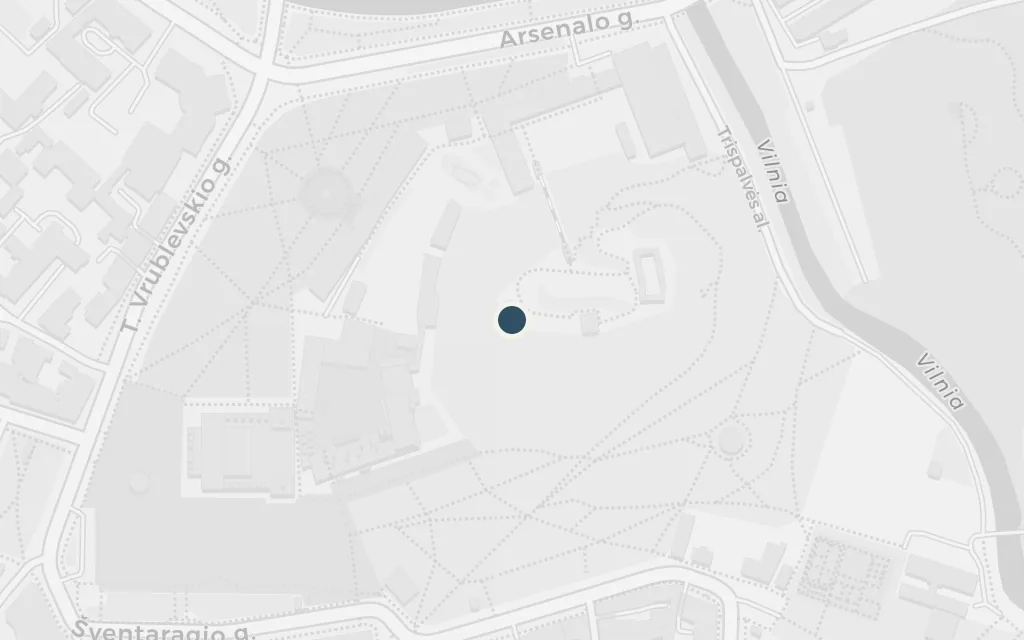
The brick tower on its steep green hill is the oldest survival of the medieval castle and the highest point over the Old Town. The narrator's Vilnius is a place of hills and vantage points, and the castle mound gives the watching, watched quality of the whole city a literal high ground.

Vargalys's narration

explicitGediminas Tower and the castle hill are real, named landmarks overlooking the mapped centre.

Open in Google Maps ↗Street View ↗

The prospekt80% in
Vytautas Vargalys

Gediminas Avenue (then Lenin Prospekt)

The prospekt

Map of Gediminas Avenue (then Lenin Prospekt) today
Vilnius today

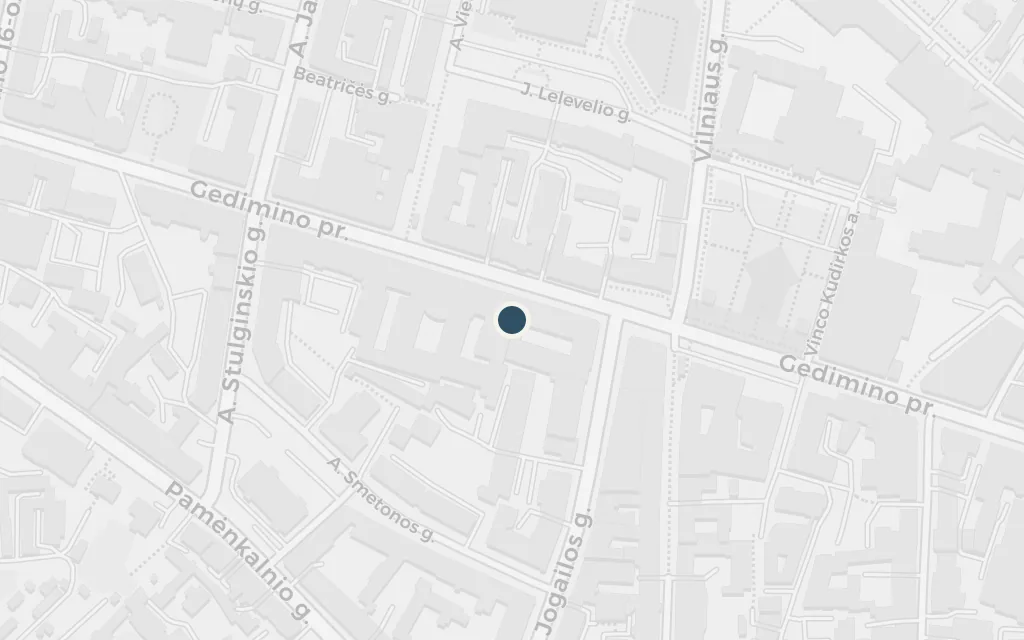
The city's main axis runs west from Cathedral Square, lined with ministries, shops and the seats of power. Under the occupation it bore Lenin's name, and in the novel this official, ceremonial street is exactly the kind of open ground where the narrator feels most exposed to the eyes of the regime.

Vargalys's narration

explicitThe central avenue is a real, named artery of Vilnius; this marks a mid-point of the street, which in the Soviet period carried Lenin's name.

Open in Google Maps ↗Street View ↗

The river100% in
Vytautas Vargalys

The Neris river

The river

Map of The Neris river today
Vilnius today

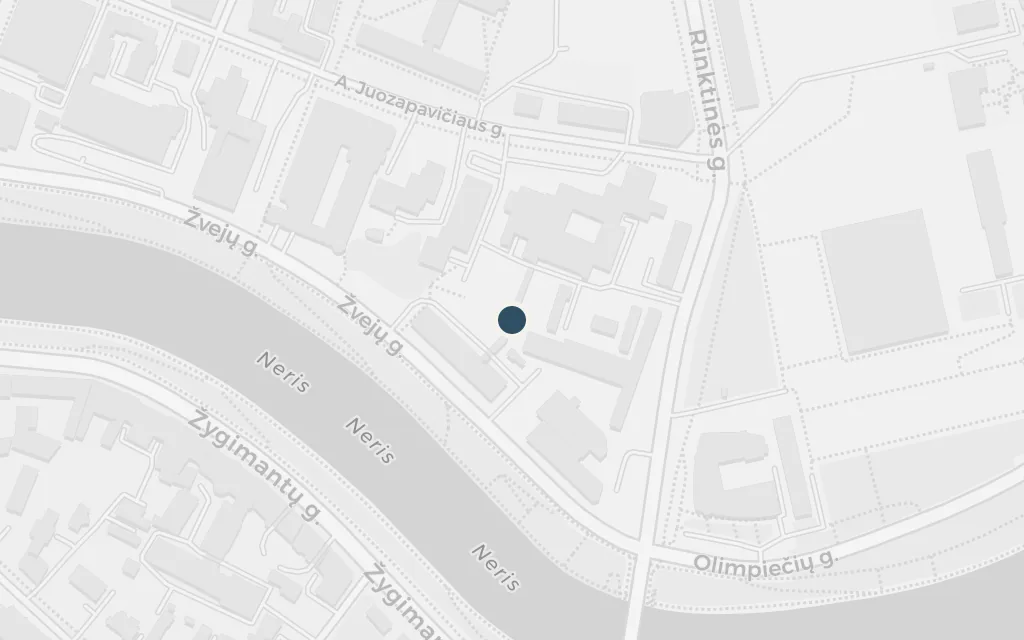
The Neris curves along the northern edge of the historic city, dividing the old centre from the newer districts across the water. In the narrator's charged geography the river is a boundary and an escape route, a moving edge to the closed, surveilled world of the Old Town.

Vargalys's narration

explicitThe Neris is the real river of Vilnius; this marks its bend just north of the Old Town by the King Mindaugas Bridge.

Open in Google Maps ↗Street View ↗