The book calls the city Kristiania (Christiania in its own spelling); that is the old name for Oslo, which the capital carried until 1925. The unnamed narrator paces it in a fever of starvation, up and down Carl Johann Street, out to the fortress by the sea, and down to the wharves. Hamsun keeps to real streets a hungry man can still walk, and it brings Norway into the atlas.
When I reached the market-place I went to the fountain and drank a little. I looked up; the dial marked ten on Our Saviour's tower.
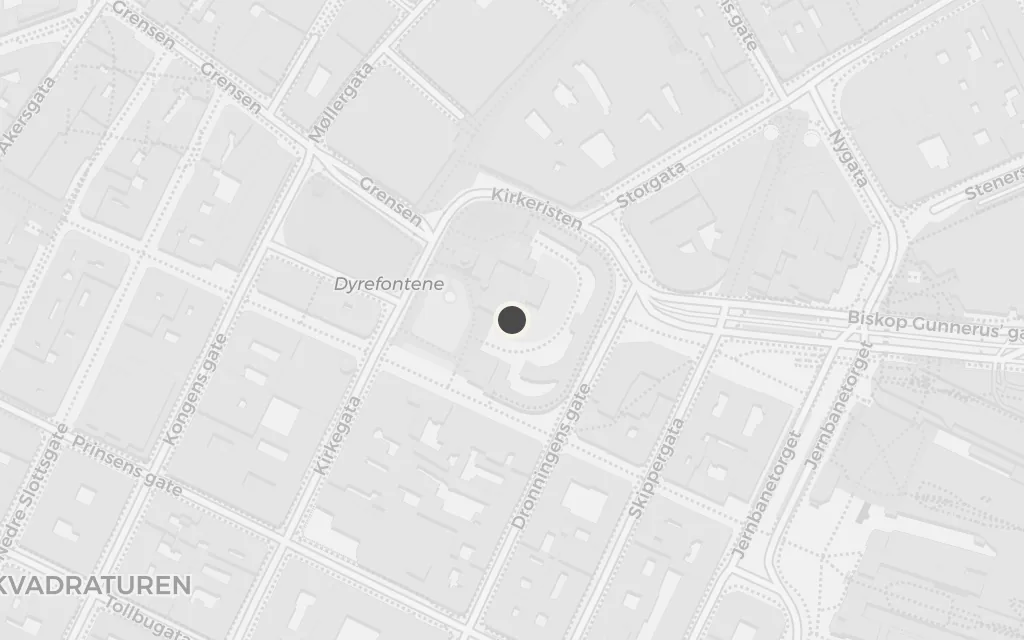
The starving narrator crosses the market square where the country women sell their sausage and vegetables, and checks the hour on the cathedral clock. Vor Frelsers kirke and the market at its foot are the fixed centre he circles all day, too proud to beg and too weak to work.
explicitOur Saviour's church is Vor Frelsers kirke, today Oslo Cathedral, which still stands over the old market square (Stortorvet). The pin marks the cathedral; the clock in its tower is the one the narrator reads.
The whole town began to get on its legs as it approached the fashionable hour for promenading. Bowing and laughing folk walked up and down Carl Johann Street.
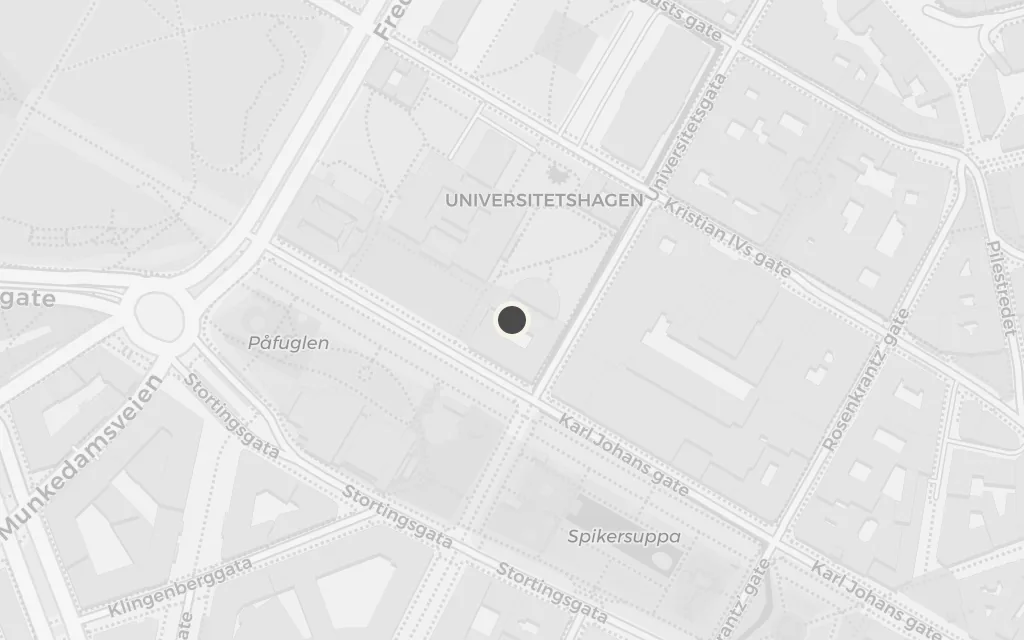
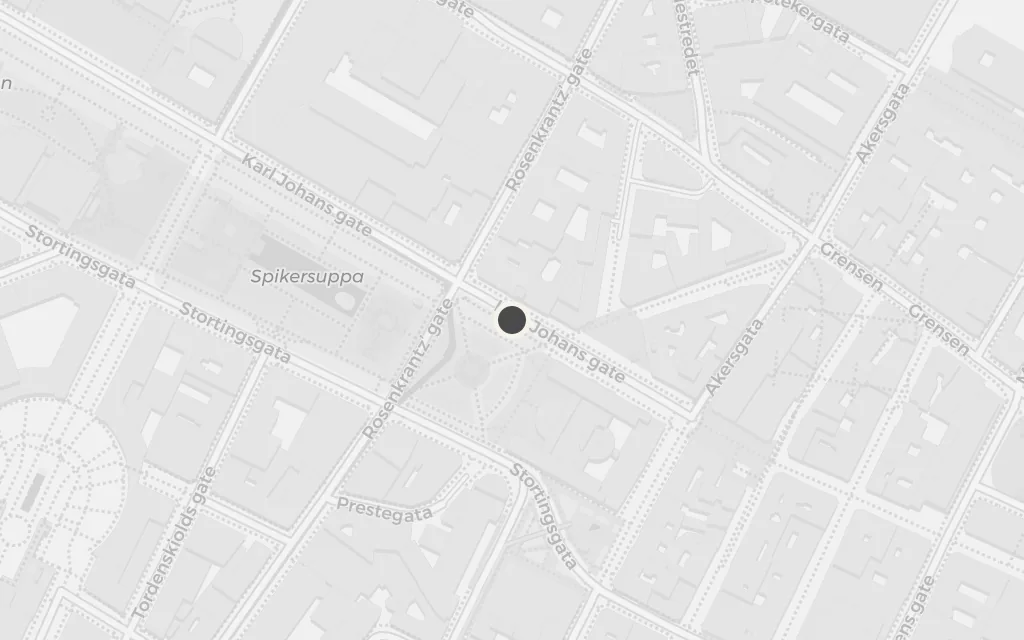
At noon the fashionable crowd fills Karl Johans gate, the city's main street, and the narrator slips past the well-dressed acquaintances he cannot let see how far he has fallen. The promenade of the healthy and fed is the stage he is being quietly written off from.
explicitCarl Johann Street is Karl Johans gate, Kristiania's grand promenade. The pin sits on its upper stretch by the old University, at the corner of University Street (Universitetsgata) where the narrator watches the acquaintances he dodges.
I pass by Ingebret's and the theatre, turn round by the box-office, and go towards the sea, near the fortress. I find a seat once more, and begin to consider afresh.
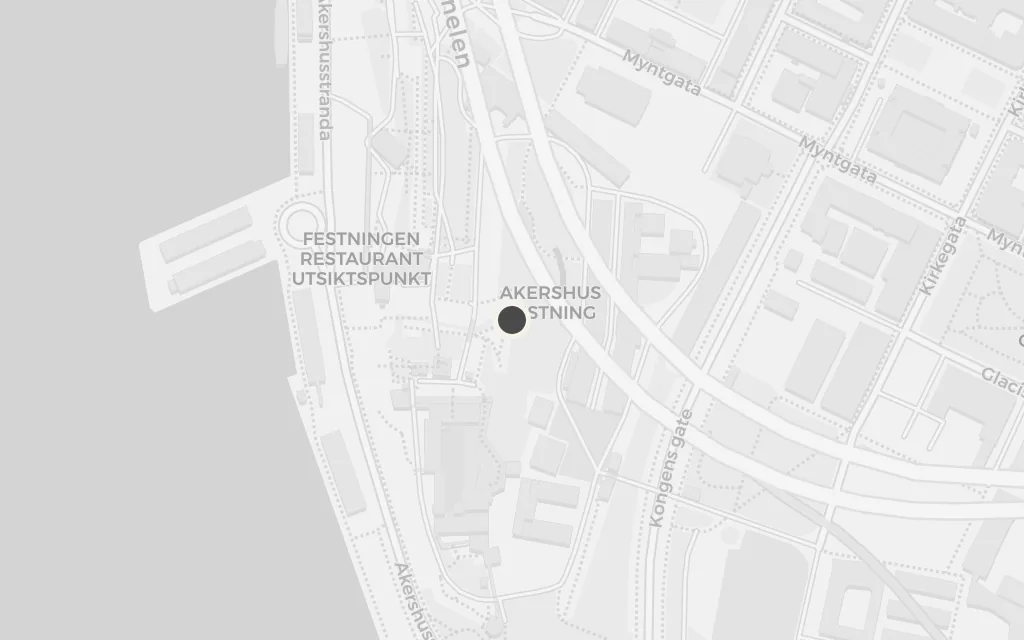
Turned out of his lodging and with nowhere to sleep, the narrator drifts down to the fjord under the walls of Akershus and sits trying to think of a hole to hide in for the night. The old fortress by the water is where his homelessness first becomes literal.
explicitThe fortress on the fjord is Akershus, the medieval castle and citadel above Oslo's harbour. The pin marks it; the narrator comes down to the water beside it looking for somewhere to sleep.
The ships lay there, and the sea rocked in the sunshine. There was bustle and movement everywhere, shrieking steam-whistles, quay porters with cases on their shoulders, lively "shanties" coming from the prams.
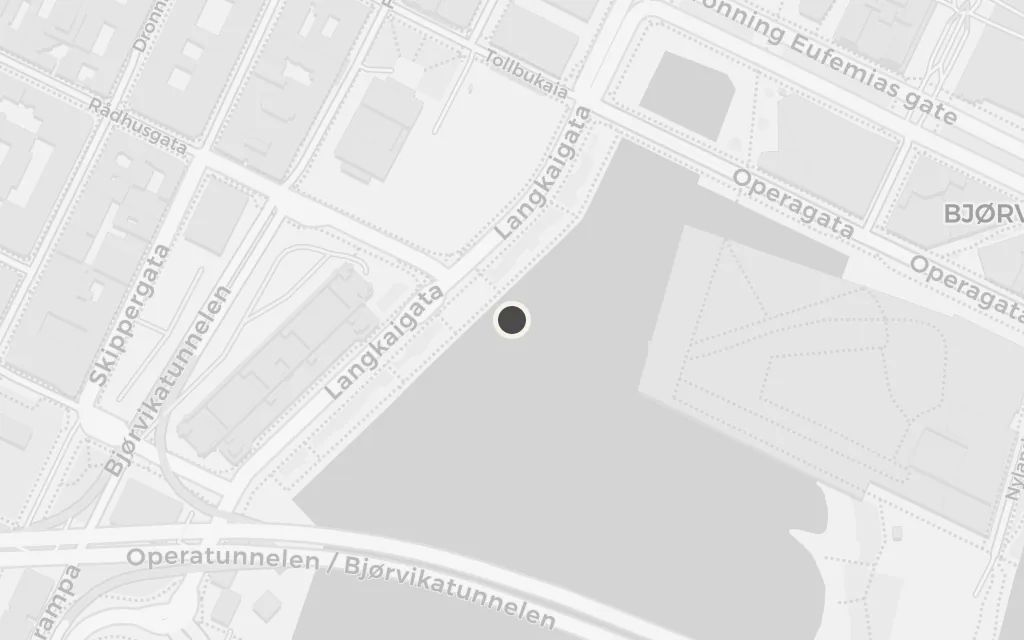
He goes down to the harbour where the ships are loading, drawn by the smell of cakes on the quay and the half-formed hope of working his passage out on a vessel like the Nun. The busy wharves are his imagined way out of the city, and out of hunger.
inferredThe narrator names the railway wharf, the railway square and Harbour Street (Havnegata), which put him on the working quays of the inner harbour just south of the station. The exact berth is not fixed; the pin marks that waterfront.
And I stayed steadily down in Vaterland. I grew more and more closely bound to this inn, this lodging-house for travellers, where I had found shelter, in spite of my starving condition.
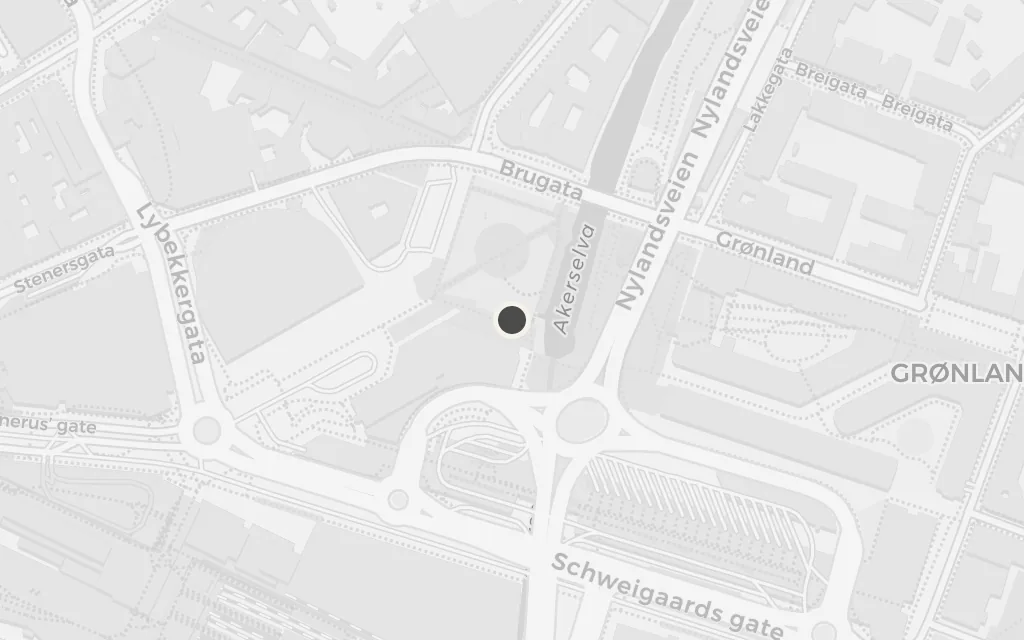
In the last part the narrator holes up in a cheap travellers' lodging-house in Vaterland, the crowded slum by the Aker river, running up a bill he cannot pay and living on the landlady's charity bread. It is the lowest point of the descent, the place he keeps returning to and dreading.
inferredVaterland was the poor riverside district at the mouth of the Aker (Akerselva), north of the present central station; most of it was cleared in the 1950s. The narrator names the quarter but not his inn, so the pin marks Vaterland, by the river, not the exact house.
It was late; they were three jovial souls together, they came out late from the Grand, and met this being going along alone past Cammermeyer's, and they addressed her.
The Grand Café on Karl Johans gate, where the fed and the literary sit late over their drinks, marks the world the narrator is shut out of. He hears of it second-hand, in a stranger's story of an evening's amusement, while a servant girl taunts him for pretending he ever dined near such a place.
explicitThe Grand is the Grand Café at the Grand Hotel on Karl Johans gate, the gathering place of Kristiania's writers and artists. The pin marks the hotel.